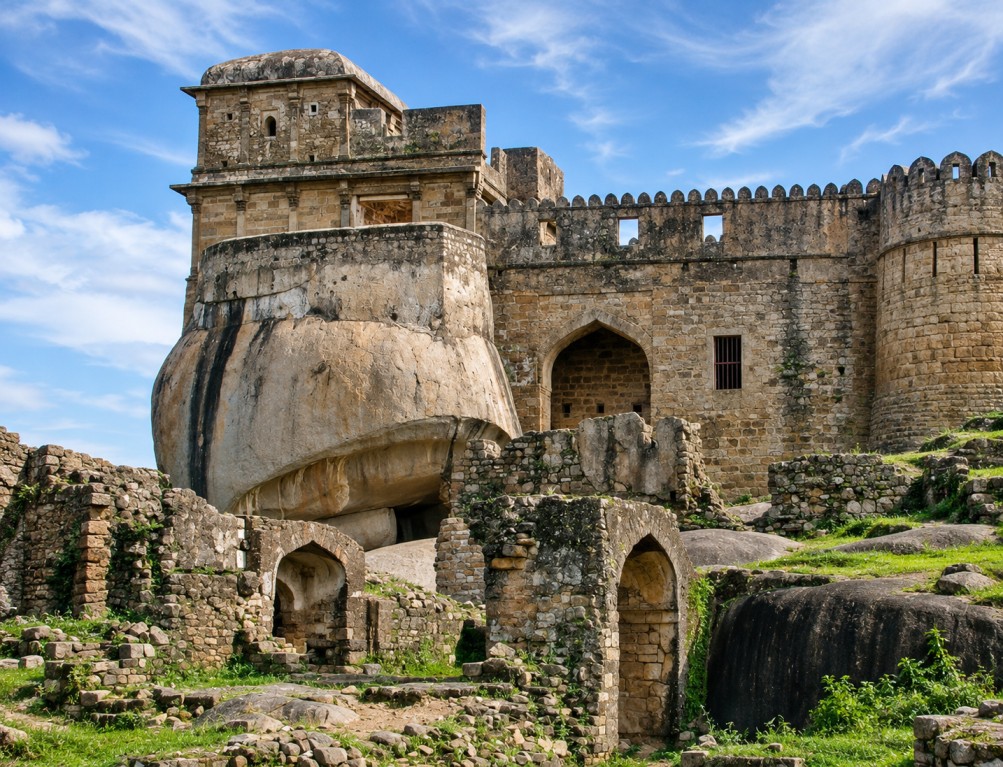
Madan-Mahal-Fort : Historic Hilltop Gem Of Jabalpur
Perched atop a rocky hill in the historic city of Jabalpur, Madan Mahal Fort is one of Madhya Pradesh's most fascinating heritage monuments. Built in the 11th century by the rulers of the Gond Kingdom, the fort offers a remarkable blend of history, architecture, and panoramic views of the surrounding landscape. Located about 5 kilometers from Jabalpur city center, Madan Mahal Fort attracts history enthusiasts, architecture lovers, photographers, families, couples, and travelers exploring Central India. Though relatively small compared to many Indian forts, its strategic hilltop location, ancient watchtower, and connection with the legendary Rani Durgavati make it an important cultural landmark and a must-visit destination in Madhya Pradesh.
Madan Mahal Fort, an 11th-century Gond hilltop stronghold
A compact defensive fort built by the Gond dynasty on a rocky hill above Jabalpur, tied to the legacy of Rani Durgavati and paired on-site with the natural Balancing Rock formation — a half-day heritage stop that anchors a wider Jabalpur circuit.
History & Cultural Significance
OverviewMadan Mahal Fort was built by Raja Madan Shah of the Gond dynasty as a military outpost and observation post rather than a residential palace — a distinction worth making clear in guiding material, since the compact scale reflects function rather than a lesser royal status.
Constructed from massive local stone blocks, the fort's watchtowers, narrow passageways and defensive chambers are built for a working strategic role, and the hilltop position still delivers the sightline advantage it was designed for.
The site carries a direct connection to Rani Durgavati, the Gond queen known for resisting the Mughal Empire in the 16th century — the fort formed part of her kingdom's territory, giving the visit a tangible link to one of Central India's most respected historical figures.
The city around the fort reflects a blend of Gond, Bundeli and broader Madhya Pradesh traditions, which supports framing Madan Mahal as an entry point into the region's tribal and dynastic history rather than an isolated monument stop.
Key Attractions
On-site and nearbyMadan Mahal Fort
Stone walls, defensive structures and hilltop viewpoints over Jabalpur — the core heritage stop.
Balancing Rock
A large natural boulder resting on another, unmoved through earthquakes and centuries of weather — a strong standalone photography draw next to the fort.
Bhedaghat Marble Rocks
A well-known nearby natural attraction, workable as a same-day pairing with the fort visit.
Dhuandhar Falls
A prominent waterfall near Bhedaghat, commonly included on the same full-day Jabalpur circuit.
Chausath Yogini Temple
A historic temple site adding further cultural depth to a heritage-focused itinerary.
Rani Durgavati Museum & Bargi Dam
A museum dedicated to the Gond queen, paired with the nearby Bargi Dam for a rounded full-day programme.
Visitor Experience
Programming notesReaching the fort involves a short climb over rocky, uneven pathways — worth flagging for guests with mobility considerations. The reward is a hilltop vantage point well suited to early-morning or late-afternoon visits, when light and temperature both work in the visitor's favour.
Cuisine & Local Craft
Ground experienceCuisine — Jabalpur's restaurants and local markets serve Poha-Jalebi, Bhutte Ka Kees, Dal Bafla, Sabudana Khichdi, Kachori, Samosa, Malpua and Rabri — a solid cross-section of Central Indian street and home cooking for itinerary meal planning.
Craft & retail — Marble handicrafts from Bhedaghat, tribal artwork, wooden handicrafts, handloom textiles, brass items and bamboo products give the city a distinct shopping identity tied directly to its Gond and Bundeli heritage.
Access & Logistics
Routing reference| Mode | Nearest point | Distance / note |
|---|---|---|
| Air | Jabalpur Airport (Dumna) | Approx. 18 km from the fort |
| Rail | Jabalpur Junction | Well connected to major Indian cities |
| Local transport | Jabalpur city | Buses, taxis and auto-rickshaws to the fort site |
Seasonality Calendar
Route planningOctober to March offers the most comfortable conditions for the hill climb and sightseeing generally. Warmer months remain accessible but favour early-morning or late-afternoon visit slots to avoid peak heat on the exposed rocky approach.
Explore Beyond [Madan Mahal Fort]
- Bhedaghat : Where The Narmada Carves Magic
- Kahna National Park : The Land Of The Royal Bengal Tiger
- Pachmarhi : The Queen Of Satpura Hills
- Khajuraho Temple : The Timeless Temple Of Art & Heritage