Loading...

Doodh-Ganga-River : Where Water Flows Like Milk

Kashmir Travel Intelligence
Destination Dossier · Jammu & Kashmir

Doodh Ganga River the milk-white waters of the Pir Panjal

A glacier-fed river descending from the Pir Panjal Range through forest, meadow and village before meeting the Jhelum near Srinagar. This dossier summarises the destination's landscape character, seasonality, access and activity profile for tour designers building Kashmir itineraries.

Region Budgam, J&K
Source Pir Panjal glaciers
Confluence Jhelum River, Srinagar
Peak season April – June
01 — Landscape

Terrain and seasonal character

Forest cover
  • Pine
  • Deodar
  • Fir
  • Willow

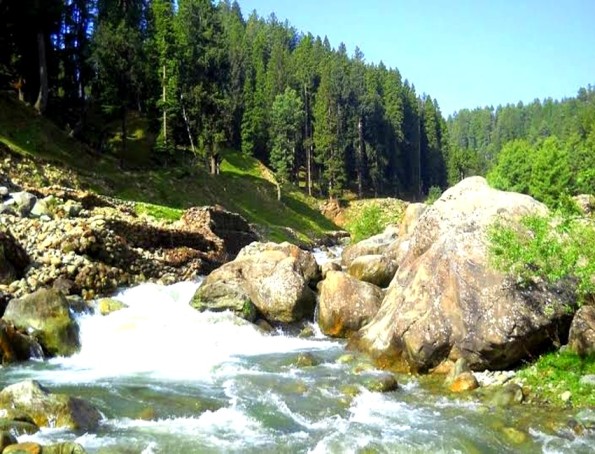
The river moves through some of the most photogenic terrain in the Kashmir valley. Its banks are lined with pine, deodar, fir and willow, opening onto meadows, farmland and snow-capped ridgelines beyond.

Water clarity remains high through most of the year, mirroring the surrounding tree line and peaks. Spring and summer bring wildflowers and dense greenery; autumn shifts the valley to gold and crimson; winter settles snow along the banks and hills, changing the destination's visual profile by season.

For itinerary design, the appeal centres on ambient quality — running water, forest air and unbroken sightlines — rather than a single marquee sight.

02 — Cultural context

Role in local life

Local dependence
  • Irrigation
  • Drinking water
  • Orchards
  • Rural livelihoods

Villages along the Doodh Ganga have relied on it for centuries for agriculture, drinking water and daily life, and it remains a working part of the rural landscape rather than a purely scenic feature.

Local communities regard the river as a symbol of purity, and farming practices, orchards and livelihoods along its course continue to reflect that relationship. Surrounding villages retain Kashmiri hospitality, craft traditions and cuisine, giving itineraries a genuine cultural layer alongside the natural one.

03 — Key sites

Points of interest and proximity

Combinable with

The riverfront itself is the primary draw, with viewpoints, shaded stretches and open meadows suited to slower, low-structure programming — picnics, short walks and photography stops rather than ticketed attractions.

Walking trails follow the river through forest and village, giving guides natural stopping points for wildlife spotting and valley views. Its location in Budgam places it within easy reach of Yusmarg, Charar-e-Sharif and Srinagar, allowing it to sit inside a multi-stop Kashmir itinerary rather than function as a standalone excursion.

04 — Activity profile

On-ground experiences

Difficulty range
  • Beginner – Intermediate
  • Family-suitable
  • Permit-dependent fishing

Activity here skews toward soft-adventure and nature programming, suitable for mixed groups and multi-generational travel.

Riverside trekking Nature walks Camping Birdwatching Landscape photography Picnicking Trout fishing (permitted zones)
05 — Ecology, cuisine & craft

What surrounds the river

Wildlife

Himalayan black bear, musk deer, red fox, occasional leopard sightings in remote tracts, Himalayan monal, pheasant, kingfisher, woodpecker, migratory birdlife, and trout in the river itself.

Cuisine

Rogan Josh, Yakhni, Gushtaba, Rista, Dum Aloo, Nadru Yakhni, Haak Saag, Modur Pulao, Kahwa and Noon Chai, alongside locally prepared trout, apples, walnuts, cherries and saffron.

Craft & retail

Srinagar remains the retail base for Pashmina, Kashmiri carpets, walnut wood carving, papier-mâché, saffron, dry fruit, embroidery and silverware.

06 — Access & seasonality

Logistics for trip planning

Peak season April – June: pleasant weather, greenery and blooms, best for general sightseeing and outdoor programming.
Shoulder season September – October: crisp air and autumn colour, favourable for photography-led itineraries.
Winter season December – February: snow-covered banks and hills, suited to slower, scenery-focused programming.
Nearest airport Srinagar International Airport, connected to major Indian cities.
Rail access Srinagar Railway Station (nearest), Jammu Tawi Railway Station (major railhead).
Road access By road from Srinagar via Budgam and surrounding villages; taxis and private vehicles available.
07 — Visitor logistics

Operational notes for guides and groups

Checklist
  • Walking shoes
  • Layered clothing
  • Fishing permits where applicable
  • No littering

Comfortable walking shoes are advisable for riverside trails, and temperatures shift quickly between morning, midday and evening, so layered clothing is recommended year-round.

Fishing is subject to local permit regulations. Groups are asked to avoid littering and to support local communities through handmade purchases and locally prepared food where the itinerary allows.

Summary

Destination summary

A low-structure, high-ambience river destination suited to families, couples, solo travellers, photographers and anglers — best positioned as a scenic and cultural addition within a broader Kashmir itinerary rather than a standalone destination.


Nearby Attractions