```html
🏔️ Gurez Valley, Kashmir – Where the World Forgets to Rush
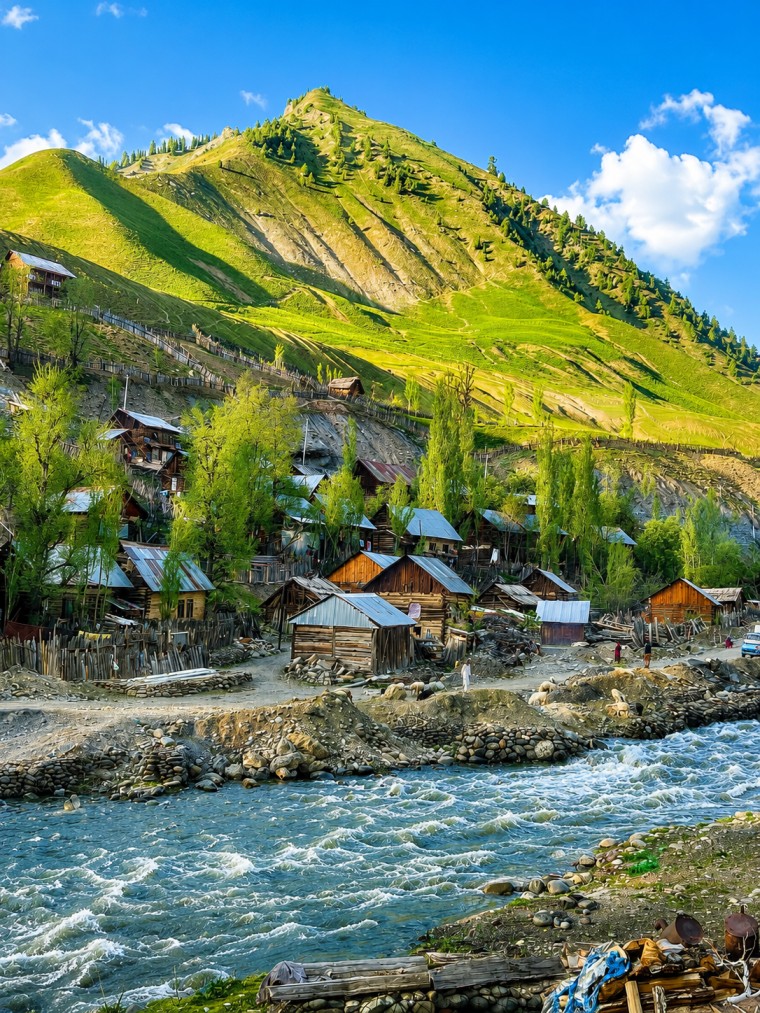
Imagine waking up to a valley so untouched, so impossibly beautiful, that you spend the first few minutes simply standing at your window in silence, half-convinced you've stepped into a dream. A silver river threading through emerald meadows, snow-dusted peaks standing sentinel on all sides, and air so clean and cold it feels like drinking from a mountain spring. That's Gurez Valley for you — not just a destination, but a revelation. Cradled in the northernmost reaches of Kashmir at an altitude of approximately 2,400 metres, this remote valley along the Kishanganga River remains one of the most staggeringly beautiful and least-visited corners of the Indian Himalayas. Come here once, and something in you quietly refuses to fully leave.
📜 A Little Bit of History First
Gurez Valley's story is as ancient and layered as the mountains that guard it. The valley has been inhabited for centuries by the Shina-speaking Dard people, one of the oldest and most distinct ethnic communities of the Kashmir Himalayas, who have preserved their unique language, folklore, and customs in proud isolation. Long before the modern world took notice, Gurez served as a critical waypoint on the ancient Silk Route trade corridor between Central Asia and the Kashmir Valley, and the ruins of old caravanserais and pathways still echo with centuries of footsteps from merchants, monks, and wanderers.
The iconic Habba Khatoon Peak, towering dramatically over the valley, carries with it one of Kashmir's most beloved legends — that of the 16th-century poet-queen Habba Khatoon, who is said to have sung her heartbroken verses here after being separated from her beloved. The valley's modern history has been shaped by its position along the Line of Control with Pakistan, which kept Gurez closed to civilians for decades and, paradoxically, preserved its extraordinary natural and cultural integrity. It was only in 2007 that the valley was formally opened to Indian tourists, and even today it remains wonderfully, almost miraculously, free of the crowds that have transformed other Kashmiri destinations.
🌄 The Attractions That Will Leave You Breathless
🏞️ Kishanganga River
The Kishanganga River is the living soul of Gurez Valley. Rushing cold and clear through the heart of the valley floor, this glacier-fed river turns the surrounding meadows into an impossibly vivid shade of green and offers outstanding opportunities for trout fishing and riverside walks that feel like wandering through a landscape painting.
⛰️ Habba Khatoon Peak
Rising dramatically above the valley, Habba Khatoon Peak is Gurez's most iconic natural landmark. At approximately 4,760 metres, this sharply defined summit dominates the skyline and carries the weight of legend and romance in equal measure. Watching the alpenglow paint its flanks at dusk is one of those experiences that stays lodged somewhere behind the eyes for years.
🏡 Dawar Village & Tulail Valley
The Dawar village, the principal settlement of the valley, offers a warm and genuine introduction to Dard Shina culture — wooden homes with intricately carved facades, apricot orchards heavy with fruit in summer, and locals who greet visitors with an openness and dignity that humbles. The surrounding alpine meadows stretching toward Tragbal and Chakwali are extraordinary for high-altitude walks, wildflower photography, and camping beneath skies thick with stars undiluted by light pollution. For those willing to trek further, the Tulail Valley — a lateral offshoot of Gurez — offers even deeper wilderness, traditional villages, and panoramic ridge-top views that few travelers have ever witnessed.
🎭 Culture, People, and Food
Gurez has a cultural character entirely unlike anywhere else in India. The Dard community of the valley maintains a distinct identity rooted in the ancient Shina language, oral poetry traditions, and customs that predate the modern borders that now define this landscape. The carved wooden architecture of village homes, the embroidered textiles of local women, and the warm hospitality extended to visitors reflect a community that has lived with the mountains for generations and carries that depth in every gesture.
When it comes to food, Gurez offers honest, hearty mountain cooking rooted in the pastoral rhythms of the valley. Freshly caught Kishanganga trout, simply prepared, is an experience that no restaurant elsewhere can replicate. Local bread baked over wood fires, homemade butter, dried apricots, and warming salt tea — the food of Gurez is nourishing in the truest sense, built for bodies that spend their days in mountain air. Guesthouses and homestays in Dawar offer the best and most authentic way to eat here, and sharing a meal with a local family is worth more than any five-star dinner.
📅 Best Time to Visit
🌿 June to September
Gurez Valley is accessible only between late May and early October, as the Razdan Pass — the only road connecting Gurez to Bandipore and the Kashmir Valley — remains snowbound and closed for the rest of the year. The months of June to September offer the best conditions, with meadows in full bloom, rivers running clear, and temperatures that are pleasantly cool during the day and brisk at night.
🌸 July and August
July and August are particularly spectacular, when the entire valley floor transforms into a carpet of wildflowers and the mountain light has a quality that makes photographers weep with gratitude.
🍂 September
September brings golden light, fewer visitors, and the quiet melancholy of a summer preparing to close — beautiful in its own right.
🚗 How to Get There
✈️ By Air
By Air: The nearest airport is Sheikh ul-Alam International Airport in Srinagar, approximately 135 kilometres from Gurez via Bandipore. Srinagar is well-connected to Delhi, Mumbai, and other major Indian cities. From Srinagar, taxis and shared cabs to Bandipore are readily available.
🛣️ By Road
By Road: From Srinagar, the route to Gurez passes through Bandipore (approximately 70 km from Srinagar) and then climbs over the Razdan Pass (3,490 metres) before descending into the valley — a total journey of roughly 5 to 6 hours from Srinagar depending on road conditions. The drive over Razdan Pass is one of the most dramatic mountain road experiences in the entire Kashmir Himalayas.
🚆 By Rail
By Rail: The nearest functional railway station is Banihal, connected to Jammu under the Udhampur-Srinagar-Baramulla Rail Link project. From Banihal, road transport to Srinagar and onward to Gurez is available.
🧭 A Few Travel Tips Before You Go
Carry sufficient warm clothing regardless of the season — Gurez nights are cold even in July. An Inner Line Permit (ILP) is required for Indian tourists visiting Gurez, obtainable in Bandipore or in Srinagar with minimal documentation. Carry enough cash, as ATM facilities are entirely absent in the valley. Book homestays in advance during the peak summer season, as accommodation options, while wonderfully authentic, are limited in number. Respect the local communities and their privacy — Gurez is not yet accustomed to mass tourism, and that is precisely what makes it extraordinary.
✨ Why You Simply Must Visit Gurez Valley
```