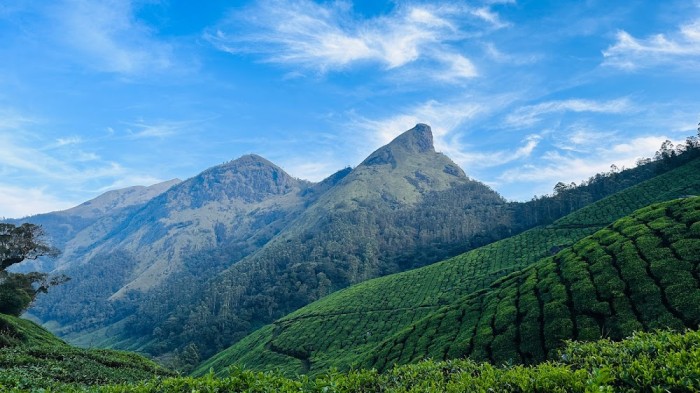
🌄 Kolukkumalai, Tamil Nadu – Where Tea Meets the Sky
There's a place where the clouds don't float above you — they float below your feet. Where the first rays of sunrise spill over a sea of mist while you're still wrapped in a blanket, sipping tea plucked from the very bushes surrounding you. That's Kolukkumalai — not just a tea estate, but the roof of South India itself. Perched at roughly 7,100–8,000 feet in the rugged folds of the Western Ghats, straddling the Tamil Nadu–Kerala border in Theni district, this is the highest tea plantation in the world, and once you've stood at its edge watching the valley disappear into cloud, you'll understand why people call the journey here as unforgettable as the destination.
📜 A Little Bit of History First
Kolukkumalai's story began in the early 1900s, when British planters looked at these impossibly steep, mist-soaked slopes and saw something nobody else did — the perfect home for tea. The British, with the support of the Chettiar brothers of Bodinayakanur, began developing the estate in earnest, and by the early 1930s the iconic two-storeyed wooden factory had been built — using nothing but pony paths and head-loads to haul materials up the mountain, since no road existed then and barely a proper one exists now. That same factory still stands today, its rickety wooden floors and colonial-era machinery untouched by time, processing tea leaves exactly the way it did nearly a century ago. While most modern estates switched to fast, mechanised CTC (Crush-Tear-Curl) methods, Kolukkumalai has fiercely held onto the slower, traditional Orthodox process — and that stubborn devotion to the old ways is precisely what makes a cup from here taste like nothing else.
🚙 The Experience That Will Leave You Breathless
Getting to Kolukkumalai is half the adventure. The final stretch — a bone-rattling, 1.5–2 hour climb over rocky, hairpin tracks — is accessible only by jeep, usually setting off from Suryanelli near Munnar. Closed cars simply can't handle it, and even four-wheel drives are best left at home in favour of a hired local jeep. The ride is bumpy, occasionally hair-raising, and absolutely worth every jolt.
At the top, the tea factory awaits — a living museum where you can watch leaves transform into world-class Broken Orange Pekoe and Flowery Orange Pekoe tea using century-old brass machinery, all for an entry fee of around ₹100. Right outside, a small stall serves tea at almost throwaway prices, and there's something quietly magical about drinking a cup grown and brewed within a few hundred metres of where you're standing.
A short walk from the jeep drop-off point takes you to the cliff edge, where the land falls away more than a kilometre into the valley below — hold your breath and hold your footing here. Nearby, a naturally formed boulder known as Lion Rock rewards those willing to walk a little further. Sunrise at Kolukkumalai has earned a reputation as one of South India's most spectacular — a slow gold light breaking over an ocean of cloud, with the plains of Tamil Nadu and the silhouette of distant Kodaikanal peaks visible on a clear day. For the more adventurous, trekking trails head onward toward Meesapulimala, one of the highest peaks in the Western Ghats.
🌿 Culture, People, and Tea
Life here moves to the rhythm of the tea bushes. More than 150 estate workers, many from families who've tended these slopes for generations, call Kolukkumalai home, working in a climate so cool and misty that no irrigation is needed — the fog alone keeps the plants thriving, and no chemical fertiliser ever touches the soil. Talk to a guide here and you'll hear stories passed down through decades: of colonial planters, of leaves carried down on foot before any road existed, of a factory that refused to modernise because the old way simply tastes better. Don't leave without picking up a packet of Kolukkumalai tea from the factory outlet — a Golden Leaf Award winner and one of the most distinctive, high-altitude brews you'll ever taste.
📅 Best Time to Visit
Kolukkumalai is open all year, but November to March is the golden window — crisp mornings, clear skies, and the best odds of a cloudless sunrise. April and May bring warmer days but still-glorious early mornings. The monsoon (June to September) drapes the hills in an almost otherworldly green and thins out the crowds, though the tracks turn slippery and visibility can drop sharply, so come prepared with a raincoat and a sense of adventure.
🧭 How to Get There
By Air: The nearest airport is Cochin International Airport, around 108–125 km away, well-connected to major Indian cities.
By Road: Most travellers base themselves in Munnar, about 32–38 km away, and take a hired jeep from Suryanelli for the final climb — cars and regular taxis cannot make this stretch.
By Rail: The nearest convenient railheads connect through Kerala and Tamil Nadu's broader network, with onward travel by road to Munnar.
📍 Nearby Places Worth Exploring
Munnar itself, with its rolling tea gardens and cool climate, is the natural base for any Kolukkumalai trip. Top Station offers another sweeping viewpoint nearby, while Meesapulimala beckons serious trekkers. Kodaikanal, visible from Kolukkumalai's heights on a clear day, is a scenic onward journey for those wanting to extend their hill-station escape.
⚠️ A Few Travel Tips Before You Go
Start early — sunrise is the whole point. Carry warm layers, since temperatures can dip into single digits even in peak season. Book your jeep in advance during winter weekends, and please, don't litter this fragile, high-altitude ecosystem that has survived almost a century untouched.
✨ Why You Simply Must Visit Kolukkumalai
Some places give you a view. Kolukkumalai gives you the feeling of standing above the world itself — clouds at your feet, history in a wooden factory, and a cup of tea that tastes like the mountain it came from. It's not an easy trip. But the hardest roads, as always, lead to the views worth remembering.
Explore The Surroundings [Kolukkumalai Hill]
Devikulam : The Serene Hill Retreat Of Kerela
Rajamala Hill : The Green Crown Of Munnar
Jallikattu-Festival
kathakali -The soul of keral's classical dance
arayoor : The Sandalwood Forest Of Kerela