🌄 Aalo — Along (Arunachal Pradesh)
📌 Overview
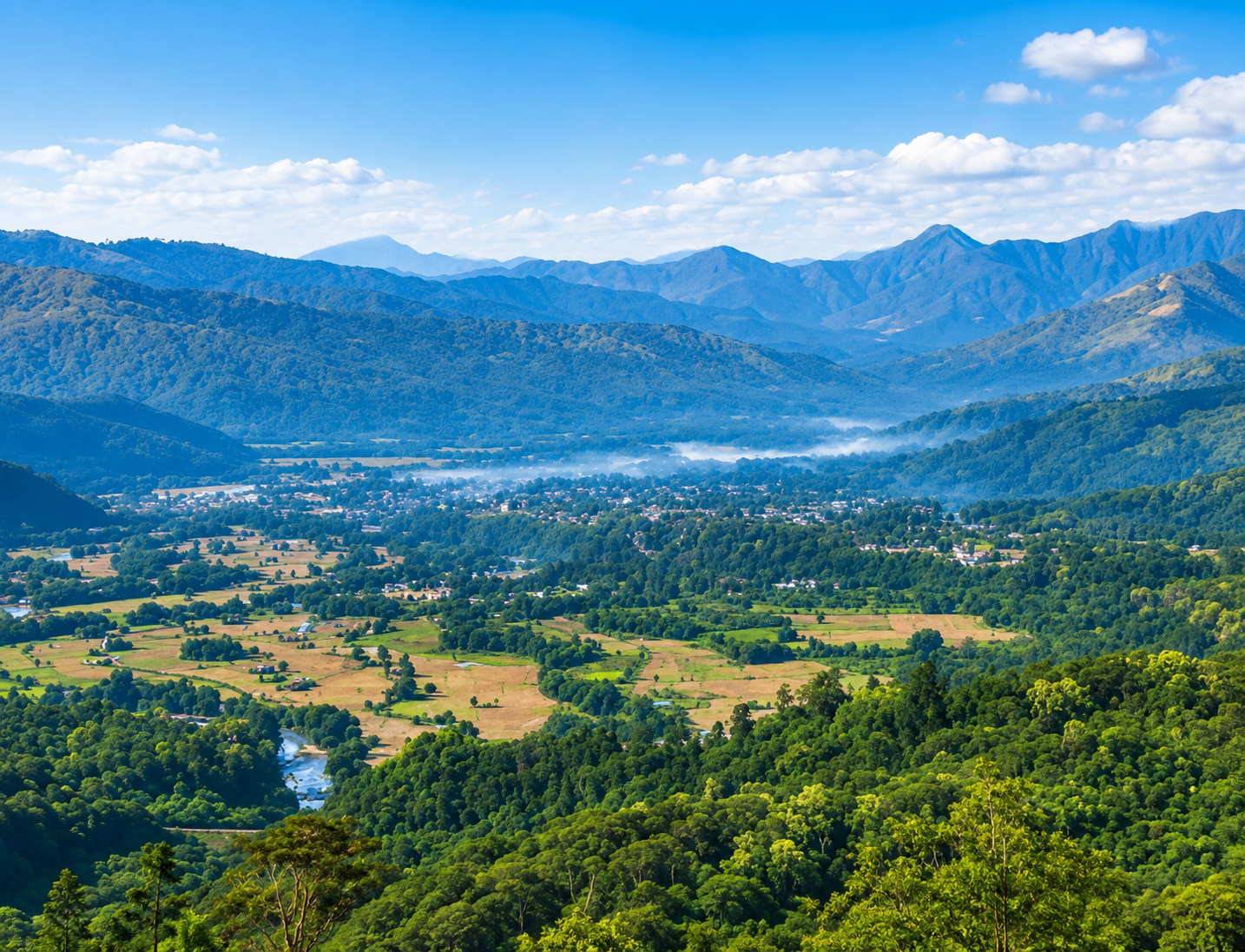
Aalo stands as one of the most culturally rich, scenically captivating, and genuinely off-the-beaten-path destinations in northeastern India, a small hill town of considerable natural beauty and deep indigenous significance that serves simultaneously as the administrative headquarters of the West Siang district of Arunachal Pradesh and as the cultural heartland of the Galo people — one of the principal sub-groups of the Adi ethnic family, among the largest and most historically rooted indigenous communities of the state. Formerly known as Along and renamed Aalo in 2006, the town is situated at the confluence of the Sipu and Siyom Rivers at an elevation of approximately 300 metres above sea level, surrounded by forested hills, orange orchards, millet and buckwheat plantations, and the sweeping river valleys that define the landscape of the West Siang interior.
The name Adi — the broader ethnic family to which the Galo belong — means hillman or mountain dweller in the local language, a name adopted after Indian independence to replace the colonial-era designation of Abor, an imposed British term that the community formally rejected as they asserted their own cultural identity in the post-independence period. The Galo people, who claim Aalo as their cultural and administrative heartland, are known for their vibrant traditions of weaving, agricultural ritual, oral literature, and the Donyi-Polo faith — the indigenous animist religion centred on the worship of Donyi, the Sun, and Polo, the Moon — whose modern revival movement was formally launched in August 1968 at a gathering of local intellectuals in Aalo itself, giving the town a particular significance in the history of Arunachal Pradesh's indigenous cultural renaissance.
The history of the Siang Valley in the modern period carries the marks of the same contested frontier narrative that shapes much of Arunachal Pradesh's recent history. The British declared the area around Along a restricted frontier zone in 1873, limiting outside access and preserving the indigenous communities and their territories from external commercial pressure. After independence, the town became a focal point for infrastructure development in the middle Siang Valley and has grown steadily as both an administrative centre and a tourism destination, drawing visitors who come for the Galo cultural heritage, the adventure activities on the Siyom River, the breathtaking remoteness of the Mechuka Valley accessible from here, and the extraordinary natural beauty of a landscape that has been shaped by the rivers of the eastern Himalayan foothills over geological time.
What distinguishes Aalo from other district headquarters towns in Arunachal Pradesh is the completeness of what it offers within a single, compact destination — a living indigenous culture of genuine depth and vitality, two rivers of considerable scenic and adventure value, the most important festival circuit in the West Siang calendar, a unique suspension bridge of traditional cane construction, a sacred Donyi-Polo institution of national significance, and the gateway access to Mechuka Valley — one of the most remote and most breathtakingly beautiful highland valleys in all of Arunachal Pradesh.
✨ Why Visit Aalo
The most compelling reason to visit Aalo is the quality of the cultural encounter it provides with the Galo community — a community whose living traditions of weaving, oral poetry, agricultural ritual, and the Donyi-Polo faith are not preserved as heritage exhibits but practised as daily and seasonal realities by a community that takes genuine pride in its identity and welcomes curious and respectful visitors into its cultural life with the warmth characteristic of the Adi peoples of the Siang Valley.
The opportunity to attend the Mopin festival in April — when the entire Galo community comes together for a celebration of the new agricultural year through traditional dance, the sharing of rice beer, the ritual of the Ette ceremony, community feasting, and the sacrificial traditions that connect the living community to the spiritual world of the Donyi-Polo faith — is one of the most authentic and culturally immersive festival experiences available anywhere in northeastern India.
Aalo is also the only practical gateway to the Mechuka Valley, sometimes called the hidden jewel of Arunachal Pradesh — a remote highland valley near the Indo-Tibetan border at an altitude of approximately 1,800 metres that is famous for its stunning mountain scenery, its ancient Tibetan Buddhist monastery, its population of the Memba tribe, and the extraordinary quality of stillness and natural beauty that its remoteness has preserved in a form that few other accessible valleys in the Eastern Himalayas can match.
📍 Key Highlights Within the Area
The Central Donyi-Polo Dere, the founding institution of the Donyi-Polo revival movement established in Aalo in 1968, is the most spiritually and culturally significant landmark in the town.
The Kabu Cane Suspension Bridge, spanning the Siyom River in a graceful arc of traditional cane and bamboo construction that has been crafted and maintained by the local community using techniques inherited across generations, is one of the most photographed and most viscerally memorable natural engineering achievements in West Siang.
The Patum Bridge, an iron suspension bridge of 146 metres spanning the Siyom River approximately four kilometres from the town centre, complements the traditional cane bridge with a very different and equally dramatic perspective on the river.
The Bagra Village offers the most directly accessible encounter with the residential architecture, daily life, and agricultural traditions of the Galo community.
Mechuka Valley — situated approximately 185 kilometres from Aalo — is the most celebrated and most geographically remote destination accessible from the town.
🎯 Activities
Attending the Mopin Festival in April is the single most culturally immersive and most personally affecting experience available in Aalo.
River rafting on the Siyom River provides the most adventurous physical engagement with the landscape of Aalo.
Trekking through the forested hills around Aalo provides the most extended and most ecologically immersive form of outdoor exploration.
Shopping for the Galo community's distinctive handicrafts provides a meaningful cultural engagement with the living craft traditions of the community.
📅 Best Time to Visit
The most favorable period to visit Aalo is from October to April, with the winter months of November to February offering the most pleasant temperatures, clear skies, and comfortable conditions for outdoor exploration.
The Yomgo River Festival in January is the most spectacularly programmed cultural and adventure event in the West Siang calendar.
March to May offers the most comfortable trekking conditions and the spring flowering of the surrounding forests.
🚗 Connectivity
Aalo is situated in the interior of the West Siang district and is accessible primarily by road.
The nearest airport with regular civilian services is Pasighat Airport in the East Siang district.
Lilabari Airport in Assam provides a broader range of domestic connections.
The nearest railway station is Murkongselek in Assam.
An Inner Line Permit is mandatory for all Indian nationals from outside Arunachal Pradesh.
Amazing places nearby