🏞️ Jibhi
Enchanting Village Retreat in Himachal Pradesh
🌲 Overview
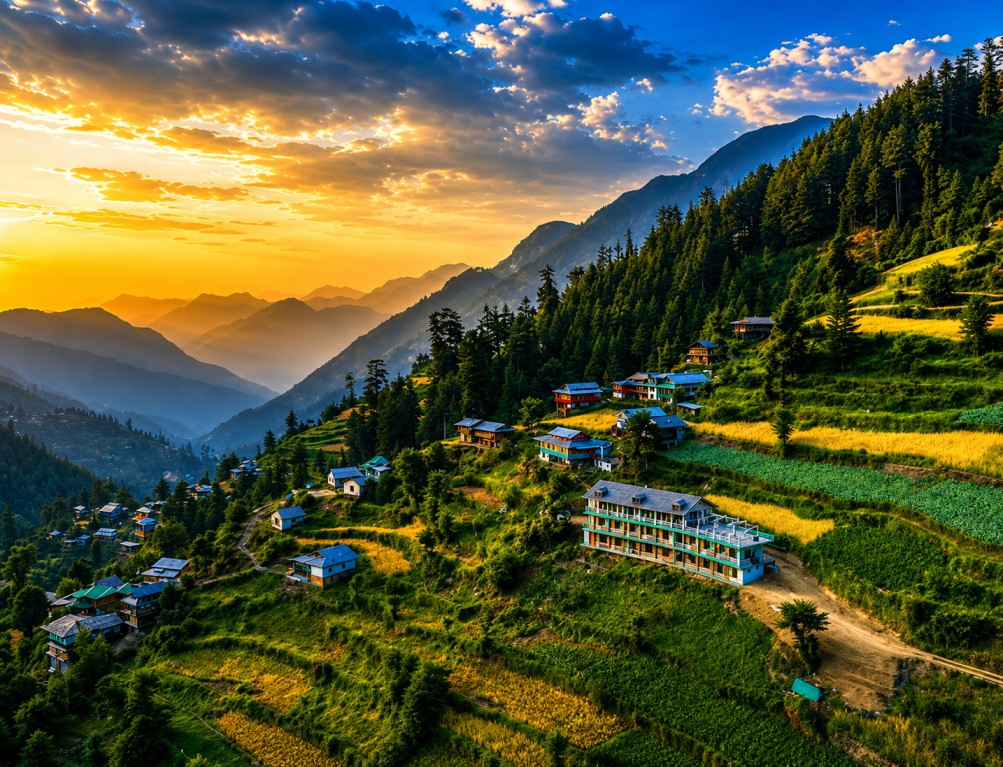
Jibhi stands as one of the most enchanting and authentically atmospheric destinations in Himachal Pradesh, representing a small highland village of extraordinary natural charm where dense forests of deodar and pine, the crystal-clear waters of the Jibhi River tumbling over smooth boulders, ancient wooden temples of considerable architectural character, and the unhurried pace of a traditional Himachali community combine to create a destination of rare natural beauty and genuine pastoral serenity that has begun drawing discerning travelers seeking an alternative to the more crowded and commercially developed hill stations of the western Himalayan region. Situated in the Banjar Valley of the Kullu district in Himachal Pradesh, nestled within the folds of the Tirthan Valley landscape at an elevation that brings cool mountain air and forested hillsides within comfortable reach of the village, Jibhi is a destination of intimate and unhurried highland character, offering a landscape defined by the narrow lanes of the traditional village winding between old wooden houses adorned with carved balconies and slate roofs, the river running through the valley in clear and energetic streams ideal for trout fishing and riverside walks, the surrounding forest of deodar cedar rising steeply above the village into ridgelines that offer trekking access to higher terrain, and an atmosphere of deep highland tranquility and natural simplicity that makes this one of the most genuinely restorative and quietly captivating destinations in the entire Kullu district.
✨ What Makes Jibhi Unique
What distinguishes Jibhi from other Himachali village destinations is not merely its scenic beauty or its forest setting, but the unique combination of riverside natural landscape, traditional wooden village architecture of considerable character, proximity to the Great Himalayan National Park buffer zone, the therapeutic simplicity of life in a small and largely untouched highland community, and the particular quality of a destination that offers genuine solitude and natural immersion within relatively easy reach of the Kullu-Manali highway. The area is complemented by the nearby Jalori Pass offering panoramic mountain views and trekking access to alpine terrain, the Serolsar Lake of serene natural beauty set within dense forest above the pass, and the broader Tirthan Valley landscape of remarkable ecological richness that surrounds Jibhi with a natural setting of exceptional completeness. This layered character elevates Jibhi beyond a simple village homestay destination into a place of genuine natural discovery, architectural heritage, and the particular restorative pleasure of a Himalayan community that has retained its essential character and unhurried pace in a way that very few accessible highland destinations in northern India still manage to offer.
🎯 Why Visit Jibhi
The recognition of Jibhi as one of the most rewarding and atmospheric village destinations in the Kullu district reflects its unparalleled combination of natural beauty, traditional cultural character, and the quality of genuine highland solitude available within a destination that remains refreshingly free from the crowds and commercial infrastructure of the more celebrated nearby destinations of Manali and Kasol. Unlike the more developed or heavily visited highland retreats of Himachal Pradesh, Jibhi offers a cohesive experience where a pristine river valley, traditional wooden village architecture, forest trails of exceptional natural richness, accessible trekking to Jalori Pass and Serolsar Lake, and the warmth and simplicity of homestay culture in a traditional Himachali community work together to create a destination of exceptional natural and human authenticity.
🏘️ The Village Experience
One of the most compelling reasons to visit is the experience of the village itself, whose traditional wooden houses with their intricately carved facades, overhanging balconies, and slate roofs represent the architectural traditions of the Kullu highlands in a state of living and largely unaltered continuity that is increasingly rare in the more developed parts of Himachal Pradesh. Walking through the village lanes in the early morning, when the mist lies in the valley and the deodar forest above is alive with birdsong and the sound of the river below provides a constant musical backdrop, offers a quality of Himalayan village experience that is genuinely difficult to find at destinations that have undergone more intensive tourism development.
🌿 Natural Beauty & Biodiversity
Additionally, Jibhi showcases a strong sense of natural access and ecological proximity through its position within the buffer landscape of the Great Himalayan National Park, whose extraordinary biodiversity and pristine forest character extend into the surrounding terrain and make the natural environment of the Tirthan Valley one of the most ecologically rich and rewarding in the entire western Himalayan region. The combination of village charm, riverside natural beauty, forest trekking, cultural simplicity, and the proximity of remarkable highland destinations including Jalori Pass and Serolsar Lake further strengthens its appeal as a deeply rewarding and comprehensively satisfying highland retreat.
⭐ Key Highlights Within the Area
💧 Jibhi River
Among the natural landmarks, the Jibhi River and its immediate valley setting stand out as the most intimate and atmospherically distinctive feature of the destination. Running in clear and energetic channels over smooth boulders through a valley of deodar forest and terraced fields, the river creates a setting of natural beauty and sensory richness that defines the essential character of Jibhi at every hour of the day, from the misty stillness of the early morning when the forest drips with dew and the water runs cold and clear, to the golden light of late afternoon when the river surface catches the sun filtering through the cedar canopy above.
⛰️ Jalori Pass
The Jalori Pass, situated approximately ten kilometres from Jibhi at an elevation of approximately 3120 metres, is another significant natural highlight of considerable trekking and scenic importance. Offering panoramic views across the Kullu and Seraj valleys on either side, the Banjar Valley below, and the distant snowfields of the inner Himalayan range above, the pass represents an accessible and rewarding high-altitude objective that rewards the drive or trek from Jibhi with a visual experience of mountain landscape breadth and grandeur that makes the effort of reaching it genuinely worthwhile.
🏔️ Serolsar Lake
The Serolsar Lake, a short trek of approximately five kilometres from the Jalori Pass through dense mixed forest, is a natural landmark of serene and intimate beauty, its dark still water set within a clearing of ancient forest and associated with the Budhi Nagin temple on its shore that draws both pilgrims and nature seekers to its quiet and contemplative setting. The forest through which the trek to Serolsar passes is remarkable for its density, the diversity of its tree species, and the quality of birdlife it supports, making the journey to the lake as rewarding as the destination itself.
🌸 Seasonal Transformations
The visual experience of Jibhi changes considerably with the seasons, as the spring months bring wildflowers and fresh green growth to the valley and the apple orchards blossom in the surrounding hillsides, the summer months offer a lush and shaded forest landscape of considerable natural richness, and the winter months transform the village and surrounding terrain into a snow-covered highland world of austere Himalayan beauty that appeals to those seeking the most quietly atmospheric encounter with this remarkable valley.
🎯 Activities
🚶 Village Walks & River Exploration
Walking along the river and exploring the village lanes and surrounding forest on foot are the most naturally rewarding and widely undertaken activities at Jibhi, with the unhurried pace and intimate scale of the village and its immediate environment making every walk a discovery of natural beauty and architectural detail that reveals successive layers of the destination's quiet and enduring character. The riverside walking routes through the deodar forest, the trails leading through terraced fields and traditional hamlets above the village, and the forest paths ascending toward the ridgelines above Jibhi together compose a network of informal walking experiences of considerable natural variety and scenic reward.
⛰️ Trekking to Jalori Pass & Serolsar Lake
Trekking to Jalori Pass and Serolsar Lake is the most structured and scenically dramatic excursion available from Jibhi, with the drive or trek to the pass followed by the forest walk to the lake composing a full-day excursion of exceptional variety that moves from the intimate character of the lower village landscape through the open panorama of the pass to the serene and enclosed world of the lakeside forest. The view from Jalori Pass across the Kullu Valley to the inner Himalayan range beyond is one of the most expansive and clearly rendered mountain panoramas available from any accessible point in this part of Himachal Pradesh.
🎣 Trout Fishing & Homestay Culture
Trout fishing in the Jibhi River and the broader Tirthan Valley waterway offers a rewarding and contemplative engagement with the river landscape for those with an interest in angling, with the clear mountain water and the forest setting of the fishing pools creating a combination of sporting and scenic pleasure that makes the experience deeply satisfying regardless of the catch. Staying in one of the traditional wooden homestays of the village and engaging with the daily rhythms of Himachali highland community life is itself a deeply rewarding and humanly enriching activity that adds a dimension of cultural warmth and domestic hospitality to the natural and trekking pleasures of the destination.
💡 Pro Tip: Combine multiple activities during your stay—morning village walks, afternoon trekking, evening riverside meditation, and cultural immersion in local homestays create a comprehensive Jibhi experience.
🗓️ Best Time to Visit
The most favorable period to visit Jibhi is from March to June and again from September to November, with each seasonal window offering a distinct and deeply rewarding encounter with the valley's natural and cultural character. The spring months of March and April bring the orchards and forest floor to life with blossom and wildflowers, the river runs clear and energetically beautiful after the winter snowmelt, and the surrounding forested hillsides take on a freshness and variety of green that makes the valley particularly beautiful and photogenic at this transitional season.
The summer months of May and June offer comfortable temperatures, accessible trekking conditions to Jalori Pass and Serolsar Lake, and the full lushness of the deodar forest in its most richly green and shaded character, making this a particularly rewarding period for extended stays that combine river walks, forest treks, and the unhurried pleasures of highland village life. The autumn months of September and October bring a golden clarity to the landscape as the monsoon retreats, the skies clear dramatically, and the surrounding hillsides take on the warm amber and golden tones of the seasonal transition that makes this one of the most photographically beautiful periods to experience the Jibhi valley in its fullest natural character.
The winter months from December to February bring snow to the upper terrain surrounding Jibhi and considerable cold to the village itself, creating a landscape of austere and quietly beautiful highland winter character that appeals to those seeking the most intimate and atmospherically distinctive encounter with the valley, though the Jalori Pass becomes snow-bound and impassable during this period.
🌸
Spring
March-April
Blossoms & wildflowers
☀️
Summer
May-June
Lush forests & trekking
🍂
Autumn
September-October
Golden clarity
❄️
Winter
December-February
Snowy landscape
🚗 Connectivity & How to Reach
Jibhi is accessible from the Kullu-Manali highway through the Aut tunnel, from which the Banjar Valley road branches off and follows the Tirthan River upstream to Banjar town before continuing to Jibhi, a total road journey of approximately three to four hours from Bhuntar near Kullu. Bhuntar Airport, situated approximately 60 kilometres from Jibhi, offers regular domestic flights from Delhi during the main season, making air access to the broader Jibhi region practical for visitors from across the country. Chandigarh, situated approximately 280 kilometres from Jibhi through the national highway and the Aut tunnel approach, provides an alternative major transportation hub with broader year-round air and rail connectivity.
Road connectivity from Shimla via the Jalori Pass road, which is open during the summer and autumn months and provides a scenic alternative approach from the south through the Seraj Valley, offers an atmospheric and rewarding route into Jibhi for those traveling from the direction of the state capital and wishing to experience the Jalori Pass landscape as part of their arrival. This makes Jibhi a highly practical and deeply rewarding inclusion in Kullu district travel itineraries, as well as a natural companion destination for travelers combining the village with visits to the Great Himalayan National Park, the Tirthan Valley, and the broader natural and cultural landscape of this remarkable corner of Himachal Pradesh.
✈️
Bhuntar Airport
60 km away
Flights from Delhi
🚗
From Bhuntar
3-4 hours
Via Banjar Valley
🛣️
Chandigarh Hub
280 km away
Major transport hub
🏔️
From Shimla
Jalori Pass route
Summer/autumn access