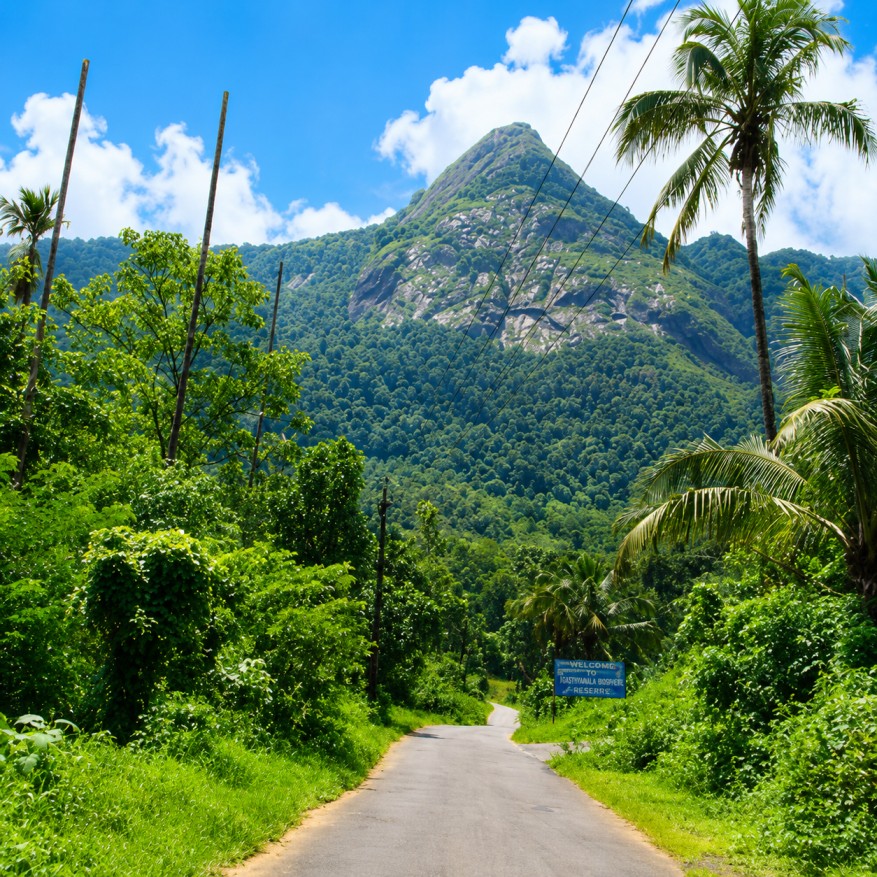
🏔️ Malappuram District, Kerala · Northern Western Ghats
Vellarimala, Kerala: The Untamed Peak Where Trekkers Find Their True North
A mountain that serious trekkers speak of with the particular respect reserved for places that ask something real of you before they give anything back.
Kerala is a state that wears its natural beauty openly — the backwaters, the hill stations, the spice-scented forests are well known and well visited. But tucked into the northern reaches of the Western Ghats, in the Wayanad and Malappuram border region, there are peaks that the mainstream tourism circuit has not yet absorbed, summits that still require genuine effort to reach and reward that effort with experiences of corresponding depth. Vellarimala is one of these — a mountain that serious trekkers in Kerala speak of with the particular respect reserved for places that ask something real of you before they give anything back.
Rising to an elevation of approximately 2,240 metres above sea level, Vellarimala is one of the highest peaks in Kerala and in the broader Western Ghats range of the state. Located in the Nilambur forest division of Malappuram district, within the dense protected forests of the northern Western Ghats, Vellarimala is not a destination you stumble upon — it requires planning, permission, physical preparation, and a willingness to spend time in genuine wilderness rather than managed tourist space. For those who meet these requirements, it delivers landscapes, ecosystems, and experiences of a quality that few destinations in Kerala can match.
The Landscape: Ancient Forest and Open Summit
The approach to Vellarimala passes through some of the most ecologically significant forest in the Western Ghats — dense, largely undisturbed tropical forest that grades from moist deciduous at lower elevations through semi-evergreen and into the shola grassland ecosystem that characterises the higher reaches of the Western Ghats. This ecological transition, experienced over the course of a single trek, is one of the most compelling aspects of the Vellarimala experience — the forest changing character progressively as you climb, the temperature dropping, the vegetation becoming more gnarled and moss-laden, until the trees give way to the open grasslands of the upper slopes.
The shola forests near the summit — the cloud forest patches unique to the higher Western Ghats — are among the most atmospherically beautiful ecosystems in India. These are ancient forests of twisted, moss-covered trees growing in sheltered hollows between the grassland ridges, their branches draped with epiphytic ferns, orchids, and lichens that give them an otherworldly, primordial quality. Walking through shola forest in the early morning, when mist moves through the trees and the light is soft and diffused, is an experience that stays with you long after the physical effort of the climb has faded from memory.
The summit views from Vellarimala, when the weather is clear, are extraordinary — the Western Ghats rolling away in every direction, the deep valleys of the Silent Valley National Park and the Nilambur forests visible to the south and west, the distant plains of Kerala and Tamil Nadu visible on clear days to the east. The scale of what you can see from this elevation — the sheer extent of the protected forest landscape that surrounds the peak — is a reminder that despite all the pressures on India's natural environments, significant areas of genuine wilderness still exist.
Trekking Vellarimala: What to Expect
The Vellarimala trek is classified as moderately to highly challenging and is not recommended for inexperienced trekkers or those without reasonable physical fitness. The trail involves significant elevation gain over its length, passes through dense forest with potentially unclear trail markers, crosses streams that can be difficult during and after the monsoon, and reaches elevations where the weather can change rapidly from clear to mist and rain.
The most common approach is from the Nilambur side of the forest, with the trek typically taking two days — one day ascending to a camp near the upper forest, the second reaching the summit and returning. Camping in the forest overnight is an experience of considerable value in its own right — the sounds of the forest after dark, the quality of the darkness away from any artificial light, and the dawn chorus of birds that begins before the first light are among the most memorable aspects of the Vellarimala experience for those who have done it.
Forest department permission is mandatory for trekking to Vellarimala, and the regulations governing access are subject to periodic change depending on conservation priorities and monsoon conditions. All trekkers must engage a registered local guide — a requirement that is simultaneously a practical necessity (the trails through dense forest are not self-navigating) and a conservation measure that ensures the forest is accessed responsibly. The guides from the local tribal and forest-edge communities have intimate knowledge of the mountain that no map or guidebook can replicate.
The trail passes through areas that are home to elephant herds, and trekkers must follow their guide's instructions carefully regarding movement and behaviour when wildlife is encountered. This is not a destination where wildlife is a distant possibility — elephants, in particular, are a genuine and regular presence on and around the trails, and respect for their space is non-negotiable.
Wildlife and Biodiversity: The Nilambur Forest's Living Community
The forests of the Nilambur division, through which the Vellarimala trek passes, are among the most biodiverse in the entire Western Ghats. The area is within the Nilgiri Biosphere Reserve — one of India's largest and most important protected forest complexes — and its wildlife community reflects this conservation status.
🐘 Asian Elephants
The most frequently encountered large mammals, moving through the forest in family groups that follow seasonal routes through the Nilambur valley and its surrounding hills. Encountering a herd of wild elephants in dense forest, at close enough range to hear them communicating and moving through the vegetation, is one of those wildlife experiences that transcends the photographic and becomes genuinely primal.
🐆 Big Cats
Tigers are present in the broader Nilgiri Biosphere Reserve, though sightings in the Vellarimala area specifically are rare. Leopards are more frequently recorded.
🦬 Gaur
The magnificent wild cattle of the Western Ghats — are regularly encountered on the forest trails, their size and solidity impressive at any range.
🐒 Lion-Tailed Macaque
One of the most endangered primates in the world and an endemic species of the Western Ghats — inhabit the shola forests of the upper slopes, their distinctive silver manes and black faces making them unmistakable when encountered.
🐐 Nilgiri Tahr
The mountain goat endemic to the higher Western Ghats — may be encountered on the open grasslands and rocky areas near the summit, their sure-footed movement across steep terrain a reminder of how perfectly adapted they are to this landscape.
🦜 Birds
Vellarimala represents one of Kerala's premier birdwatching locations. The Nilgiri laughingthrush, white-bellied shortwing, Kerala laughingthrush, Nilgiri pipit, great hornbill, Malabar whistling thrush, Malabar trogon, Indian pitta, and numerous Western Ghats endemics are recorded from the area.
The Human Landscape: Tribal Communities and Forest Culture
The forests around Vellarimala are the traditional homeland of several indigenous tribal communities — the Kadar, Cholanaickan, Kurumba, and other peoples who have lived in relationship with this forest for millennia and whose knowledge of it represents an irreplaceable repository of ecological understanding. Some of the best guides for the Vellarimala trek come from these communities, and trekking with a guide who has grown up in the forest provides insights into the landscape that no academic training can replicate.
The Nilambur valley below the mountain is historically significant as one of the most important teak-growing regions in the world — the Nilambur Teak Plantation, established in 1840, is among the oldest managed teak plantations in existence and is a source of considerable local pride. The town of Nilambur at the foot of the hills serves as the primary base for trekkers approaching Vellarimala and offers a pleasant, functional town with good local food, basic accommodation, and easy access to the forest entry points.
The Adivasi Orumai movement and various community forest rights initiatives in the Nilambur area have important implications for how forest-based tourism is conducted in this region — supporting community-based tourism operators directly benefits the tribal communities whose traditional territories encompass the Vellarimala forests.
Nearby Attractions: Enriching the Vellarimala Visit
Nilambur town itself offers the Conolly's Plot — the oldest teak plantation in the world, established by H.V. Conolly in 1840 — and the Teak Museum, one of only a few museums in the world dedicated entirely to teak, its history, ecology, and uses. These are genuinely interesting attractions that add cultural and historical context to what is otherwise primarily a wilderness experience.
Thiruvali and Adyanpara waterfalls in the Nilambur area offer beautiful waterfall experiences accessible to visitors who are not up for the full Vellarimala trek. Silent Valley National Park — one of Kerala's most pristine protected areas and accessible from the Mannarkkad side — is within reasonable driving distance and offers an exceptional wildlife experience that complements the Vellarimala trek perfectly.
Malappuram town — the district headquarters, approximately 60 kilometres from Nilambur — offers the fuller range of accommodation, dining, and transport options that serve as a comfortable base for the wider regional itinerary.
Best Time to Visit Vellarimala
The trekking season for Vellarimala runs from October to May, with the peak period being November to February when the weather is clearest, temperatures are most comfortable, and the post-monsoon forest is at its most vivid and alive. The monsoon months (June to September) see the area receive extremely heavy rainfall, rendering the trails dangerous and forest access generally closed.
The forest is still deeply green from the monsoon, streams are running strongly, mist moves through the shola patches, and the birdlife is at its most active.
Weather is clearest, temperatures most comfortable, and the post-monsoon forest is at its most vivid and alive.
The clearest summit views and the best wildlife sightings as the dry season concentrates animals around water sources.
Extremely heavy rainfall renders the trails dangerous and forest access generally closed. Not recommended.
How to Reach Vellarimala
The nearest railway station is Nilambur Road on the Shoranur-Nilambur rail line, making Nilambur town easily accessible from Kozhikode, Thrissur, and Ernakulam by train. The nearest airport is Calicut International Airport (approximately 80 kilometres from Nilambur), with good connectivity to major Indian cities and international connections to Gulf destinations that serve Kerala's large expatriate community. From Nilambur, the forest entry points for the Vellarimala trek are accessible by road with a private vehicle or taxi.
🚂 By Train
Nilambur Road Station on the Shoranur-Nilambur rail line. Accessible from Kozhikode, Thrissur, and Ernakulam.
✈️ By Air
Calicut International Airport, approximately 80 km from Nilambur. Good connectivity to major Indian cities and Gulf destinations.
🚗 Local Transport
From Nilambur town, forest entry points for the trek are accessible by road with a private vehicle or taxi.
Travel Tips for Vellarimala
- Obtain forest department permits well in advance — the process requires time and the number of trekkers permitted per day is limited.
- Book a registered local guide through established community tourism operators in Nilambur.
- Carry sufficient water, food, and rain gear regardless of the season — the weather at elevation can change rapidly.
- Wear proper trekking boots with ankle support — the terrain is uneven and can be slippery.
- Carry a first aid kit and any personal medications.
- Leave no waste in the forest — the carry-in, carry-out principle is essential in an ecosystem of this ecological sensitivity.