🌄 Madayipara, Kerala
The Laterite plateau that Rises Above The Ordinary
Kerala has a way of surprising even well-travelled visitors. You think you know what it offers — the backwaters, the hill stations, the beaches, the spice gardens — and then you turn a corner in the northern part of the state and encounter something entirely outside that familiar repertoire. Madayipara is exactly that kind of surprise: a vast, flat-topped laterite plateau rising unexpectedly from the coastal lowlands of Kannur district, a landscape so unlike anything else in Kerala that first-time visitors often stop in genuine bewilderment, trying to reconcile what they are seeing with their mental image of what this state looks like.
Located near Payyanur in northern Kerala, approximately 15 kilometres from the Arabian Sea coast and about 90 kilometres north of Kozhikode (Calicut), Madayipara is a laterite plateau covering roughly 25 square kilometres at an elevation of about 40–50 metres above the surrounding plains — modest by hill station standards, but dramatic in context because the surrounding land is so flat. The plateau's edges drop away in near-vertical laterite cliffs that glow deep red-orange in the late afternoon sun, giving the place a visual character unlike anything else in Kerala's otherwise predominantly green landscape.
For a destination that receives relatively little attention in mainstream Kerala tourism, Madayipara offers a remarkable combination of ecological significance, cultural depth, historical interest, and the kind of open, sky-dominated landscape that is genuinely rare in densely forested, densely populated Kerala. It is a place that rewards the curious traveller enormously and the complacent tourist not at all — which is precisely its appeal.
🌿 Natural Beauty and Ecological Significance
The defining characteristic of Madayipara is its laterite geology — the plateau is composed of laterite rock, a soil type formed through intense weathering of iron and aluminium-rich rock over millennia in tropical conditions. The laterite gives the landscape its distinctive red-brown colour, its characteristic flat-topped profile, and its unique ecological conditions that support a plant community found nowhere else in Kerala.
The plateau surface is covered with a mosaic of grasslands, scrub vegetation, seasonal wetlands, and rocky outcrops that create a patchwork of habitats supporting an extraordinary diversity of life. This is not the dense, shaded forest of the Western Ghats — it is an open, sun-drenched landscape of remarkable ecological sensitivity, where the thin laterite soil and seasonal water availability create conditions that favour highly specialised plant species found nowhere else.
Madayipara is an internationally recognised Important Bird Area (IBA) — a designation that reflects the plateau's significance as habitat for migratory and resident bird species of conservation importance. During the monsoon and post-monsoon seasons, the seasonal wetlands and grasslands of the plateau attract large numbers of waterbirds and waders, while the open landscape provides hunting ground for raptors throughout the year.
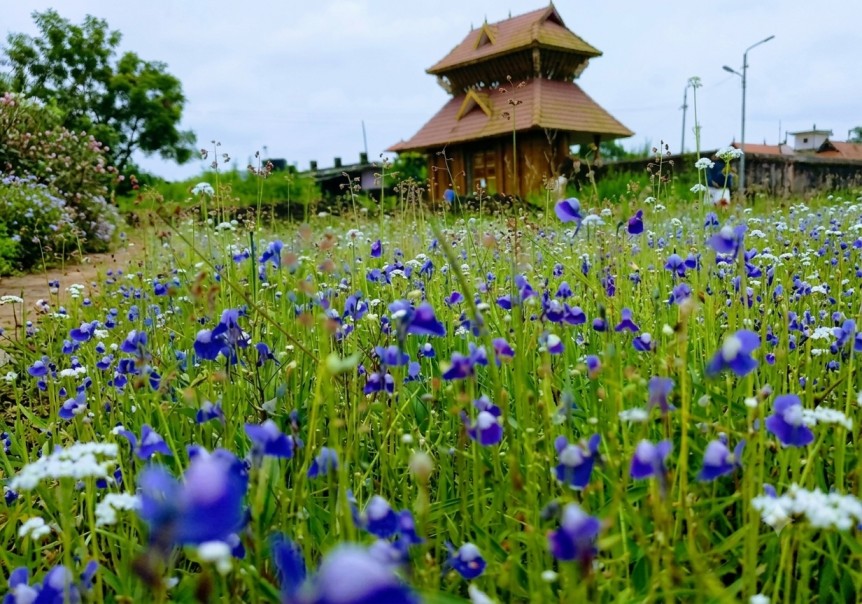
The plateau is also known for its extraordinary wildflower displays, particularly during and immediately after the monsoon when the laterite surface blooms with a profusion of flowering plants — many of them endemic to the laterite plateaus of Kerala and found nowhere else in the world. Botanists and naturalists who know Madayipara regard these seasonal wildflower displays as among the most remarkable in Kerala, comparable in their own way to the famous Kaas Plateau wildflowers of Maharashtra.
🏛️ History and Cultural Significance
Madayipara is not merely an ecological landmark — it carries significant historical and cultural weight in the context of northern Kerala's rich heritage. The plateau and its surroundings have been inhabited and culturally active for centuries, and several important historical and religious sites are located within and around it.
The Madayi Fort — located adjacent to the plateau near the Madayi River — is one of the most historically significant forts in northern Kerala. Built originally by the Kolathiri Rajas (the rulers of Kannur and the surrounding region) and subsequently occupied and modified by various powers including the Portuguese, the Dutch, and Hyder Ali's forces, Madayi Fort represents a layered history of maritime trade, colonial conflict, and local political power that spans several centuries.
The fort's position — overlooking the river and the coastal approaches — reflects its original function as a defensive and commercial installation controlling the lucrative spice trade that passed through the Malabar Coast. The Madayi River, which flows past the plateau and the fort on its way to the sea, was itself an important waterway in the medieval trade network that made this part of Kerala one of the most commercially significant coastlines in the ancient world.Major Points of Interest Around Madayipara
📍 Major Points of Interest
The Plateau Viewpoints
The edges of the Madayipara plateau offer panoramic views across the surrounding coastal lowlands that are particularly spectacular in the early morning and late afternoon light. The laterite cliffs glow warm orange-red in these hours, and the contrast between the red rock, the green plains below, and the distant blue of the Arabian Sea (visible on clear days) creates a visual composition of genuine beauty.
The Madayi Fort ruins — a short distance from the plateau — are worth visiting for their historical interest and for the river views they command. The site is relatively undeveloped as a tourist attraction, which means you can explore it without the infrastructure of ticket counters and souvenir stalls, but also without interpretive signage — a local guide familiar with the history adds considerably to the experience.
The Madayi River itself is pleasant for an early morning walk along its banks, the water reflecting the surrounding palm trees and the occasional kingfisher or egret hunting along the margins.
Approximately 25 kilometres north of Madayipara, Ezhimala — another laterite hill rising dramatically from the coast — is a site of historical, ecological, and military significance (it houses the Indian Naval Academy). The hill and its surroundings offer additional examples of the laterite plateau landscape and a coastal perspective that complements the inland experience of Madayipara.
The nearest town to Madayipara, Payyanur is a pleasant, unpretentious northern Kerala town with good local food, a functioning local market, and easy access to the Payyanur Beach — a relatively quiet stretch of the Malabar Coast that lacks the tourist infrastructure of more famous Kerala beaches but offers a genuine local beach experience in a beautiful setting.
🦅 Wildlife and Birdwatching
For birdwatchers, Madayipara is a destination of genuine significance. The combination of open grassland, seasonal wetlands, scrub, and laterite outcrops creates a diversity of habitats that supports a corresponding diversity of bird species. Raptors — including black-shouldered kite, Brahminy kite, crested hawk-eagle, and various harrier species — are regularly seen hunting over the open plateau.
The seasonal wetlands that form in the plateau's depressions during and after the monsoon attract painted storks, open-billed storks, purple herons, various egret species, and numerous wader species during the migratory season. Larks, pipits, and wagtails use the grasslands. The scrub areas around the plateau edges support warblers, sunbirds, flowerpeckers, and a range of small passerines.
For serious birdwatchers, a dawn visit to the plateau during the October to February period — when migratory species are present and the light is at its most beautiful — is likely to produce a highly satisfying species list and photographic opportunities of real quality.
🧭 Travel Information
The ideal visiting period depends on what you are primarily seeking. For wildflowers and seasonal wetland birds, visit August to October — immediately after and during the tail end of the monsoon. For comfortable weather and migratory birds, visit November to February. For Theyyam performances, visit October to May — checking in advance with local sources about the specific schedule of performances in the surrounding villages.
The nearest railway station is Payyanur, well connected on the Shoranur-Mangalore rail line that runs through coastal Kerala and Karnataka. From Payyanur, Madayipara is accessible by auto-rickshaw or taxi — approximately 5–8 kilometres depending on the specific access point. The nearest airport is Calicut International Airport (approximately 90 kilometres south) or Mangalore International Airport (approximately 100 kilometres north).
Carry water and sun protection — the open plateau offers little shade and can be significantly warmer than the surrounding lowlands during midday. Local guides from Payyanur or the surrounding villages add immensely to the experience. For Theyyam visits, dress modestly and respectfully, ask permission before photographing, and follow the guidance of local community members about appropriate behaviour in sacred spaces. The plateau is most rewarding for those who move slowly and observantly — this is not a destination for rushing.
✨ A Landscape That Stays With You
Madayipara will not appear on most Kerala itineraries, and that is, for now, part of its value. It is a place that rewards the traveller who has moved past the checklist mentality and is genuinely open to being surprised — a red laterite plateau rising from the Kerala plains, full of endemic flowers and rare birds and ancient history and living ritual, asking nothing of you except that you pay attention. That, in travel as in life, turns out to be quite enough.
Explore Beyond [Madayipara]
- Varkala
- Theyyam: A Sacred Dance Tradition Of Kerela
- Arimba-Hills : The Mini Ooty Of Kerela
- Silent-Valley-National-Park : Where Slience Speak Nature
- Wayanad Wildlife Sanctuary