The City That
Weaves Time
Into Silk
Patan — once the medieval capital of Gujarat, still home to a living tradition of silk weaving so technically complex, no one else on earth has replicated it.
Tradition
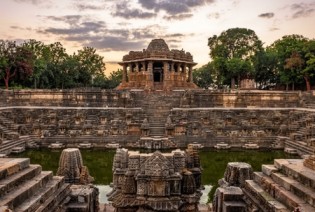
Rani ki Vav
Weave Patola
Heritage Designation
A city where the past is still present
"It is a city that rewards the curious, the patient, and the traveller who understands that the most profound cultural experiences are rarely the loudest ones."
Patan sits at the rare intersection of UNESCO heritage, living craft, and authentic India — a destination that sells itself through experience, not infrastructure. A guaranteed standout in any Gujarat itinerary.
There are cities that wear their history lightly, and there are cities where the past is so present, so woven into the daily fabric of life, that to walk their streets is to move through centuries simultaneously. Patan, in the Mehsana district of northern Gujarat, belongs firmly to the second kind. Once the medieval capital of Gujarat — known then as Anhilwara Patan — it was for three centuries one of the most powerful, prosperous, and culturally sophisticated cities in the Indian subcontinent. Empires rose and fell around it. Armies came and went. The capital eventually moved on. And yet Patan endured, carrying its heritage forward not in museums or monuments alone, but in the living traditions of its craftspeople — most extraordinarily, in the hands of the weavers who still produce, in a handful of families, one of the most technically complex textiles ever created by human beings.
Patan today is a city of quiet intensity. It does not announce itself with grand boulevards or overwhelming skylines. It reveals itself slowly, in narrow lanes that open unexpectedly onto ancient stepwells, in the sound of wooden looms clicking through the morning air, in the weight and sheen of a silk sari that took six months to make and carries within it a tradition stretching back over seven hundred years. It is a city that rewards the curious, the patient, and the traveller who understands that the most profound cultural experiences are rarely the loudest ones.
Rani ki Vav — A Stepwell Beyond Compare
The Queen's Stepwell · 11th Century CE · Featured on India's ₹100 Banknote
Any conversation about Patan must begin with Rani ki Vav — the Queen's Stepwell — a structure so extraordinary in its conception and execution that UNESCO designated it a World Heritage Site in 2014 and it now appears on the Indian 100-rupee note, one of the highest honours a monument can receive in a country overflowing with architectural wonders.
Built in the 11th century by Queen Udayamati in memory of her husband, King Bhimdev I of the Solanki dynasty — the same king under whose reign the Modhera Sun Temple was constructed — Rani ki Vav is not simply a stepwell. It is a subterranean temple, a sacred artwork, and an engineering marvel compressed into a single structure. Descending into it is one of the most remarkable architectural experiences in India.
The stepwell extends approximately 64 metres into the earth across seven levels of carved stone galleries, each tier more elaborately decorated than the last. The walls are lined with over 500 principal sculptures and more than 1,000 minor ones, depicting gods, goddesses, celestial beings, and the ten avatars of Vishnu in a programme of iconographic richness that rivals the finest temple sculpture anywhere in the subcontinent. The figures are carved with a delicacy and naturalism that is startling — they seem not to have been cut from stone but to have emerged from it, fully formed. The lowest level, closest to the water, features a panel of the reclining Vishnu of such refinement and serene beauty that it is regarded by art historians as among the masterpieces of medieval Indian sculpture.
Rani ki Vav was buried under silt for centuries, protected from the destruction visited upon other monuments in the region, which accounts for the extraordinary state of preservation of its carvings. It was excavated by the Archaeological Survey of India in the 1980s and emerged, essentially intact, as one of the finest surprises in Indian heritage. To descend its steps in the early morning, when the light is soft and the site is quiet, is to experience the past not as something distant and theoretical but as something immediate, tactile, and deeply alive.
Rani ki Vav is visually unlike anything else in India — a subterranean gallery of 1,500 sculptures. Clients who have seen Hampi, Ellora, or Belur will still be stunned. Offer early-morning exclusive access for premium itineraries.
Rani ki Vav appears on India's 100-rupee banknote — one of the highest honours a monument can receive in a country overflowing with architectural wonders. A conversation-starter your clients will love to share.
The Most Complex Cloth
in the World
Patola is produced exclusively in Patan — a double ikat silk sari so technically demanding, no one else on earth has successfully replicated it at the same level of quality.
Both the warp and weft threads are dyed separately in precise patterns before weaving begins — a process known as double ikat that requires absolute accuracy at every stage.
When the threads are interlocked on the loom, the patterns on each set must align exactly to create a seamless, mirror-perfect geometric design across the entire length of the fabric. There is no margin for error.
A single sari can take between four months and a year to complete. Always woven by a pair — working in silent coordination — passing the shuttle back and forth across a loom that might occupy them for the better part of a year.
Today only three families in Patan — all of them from the Salvi community — still practise the full double ikat Patola tradition. The knowledge has been passed down within these families for generations and is considered so precious, so difficult, and so time-consuming that it has never been successfully replicated elsewhere at the same level of quality. Visiting one of the Salvi family workshops is one of the most memorable cultural experiences Gujarat has to offer. Watching the two weavers — always a pair, working in silent coordination — pass the shuttle back and forth across a loom that might occupy them for the better part of a year, is to witness craft at a level of commitment and skill that genuinely humbles.
The saris themselves, in their jewel-like colours and endlessly intricate geometric patterns, are objects of extraordinary beauty. They have been traded across Asia for centuries — Patola saris appear in the royal courts of Indonesia, Thailand, and Malaysia, where they were considered among the most precious textiles a ruler could possess. Owning one today is both an aesthetic pleasure and an act of cultural preservation.
A Workshop Visit That Sells Itself
Visiting one of the Salvi family workshops is one of the most memorable cultural experiences Gujarat has to offer. For B2B travel agents and tour designers, this is a rare guaranteed moment of awe — quiet, intimate, and impossible to replicate anywhere else on earth. Package it as an exclusive access experience for premium clientele.
Heritage Tours &
The City Itself
Beyond Rani ki Vav and the Patola workshops, Patan rewards unhurried exploration. The old city contains over a hundred ancient temples and numerous heritage havelis — traditional merchant mansions with intricately carved wooden facades that speak to the city's long history as a centre of trade and wealth. The streets of the old town, particularly around the textile quarter, retain an atmosphere of medieval continuity that is increasingly rare in urban India.
October to March brings cool, clear weather ideal for walking the old city and exploring Rani ki Vav in comfort.
One night allows for a full day of exploration — the stepwell at dawn, the Patola workshops through the morning, the old city lanes in the afternoon, and the quiet pleasure of a city that has been keeping its traditions alive, thread by thread, for seven centuries.
Don't miss These Nearby Gems
Adalaj Stepwell
Rann Utsav
Gir-National-Park
Lakshmi Vilas Palace
Statue Of Unity