🌧️ Shivamogga District, Karnataka · Malnad Region, Western Ghats
Agumbe, Karnataka: The Cherrapunji of the South Where Rain Is a Way of Life
A small hill village that has built its entire identity around rain — and rewards every visitor who stops long enough to understand why.
There are places in India defined by their sunshine, and then there is Agumbe — a small hill village in the Shivamogga district of Karnataka that has built its entire identity around rain. Receiving an average annual rainfall of approximately 7,000 to 8,000 millimetres, Agumbe holds the distinction of being the second wettest place in India after Cherrapunji in Meghalaya — a fact that shapes everything about it, from its extraordinary biodiversity to its misty, moss-covered aesthetic to the particular kind of traveller it attracts. Located in the Malnad region of the Western Ghats, approximately 100 kilometres from Mangalore and 380 kilometres from Bengaluru, Agumbe sits at an elevation of about 600 metres on the crest of the Ghats escarpment, where the moisture-laden winds of the Arabian Sea rise, cool, and release their water with spectacular generosity.
For a village of barely a few hundred permanent residents, Agumbe carries a reputation far beyond its size. It is famous among herpetologists as one of the best places in the world to study the king cobra — the world's longest venomous snake and a species that finds the dense, wet forests of the Western Ghats ideal habitat. It is famous among naturalists for its role within one of the world's most important biodiversity hotspots. It is famous among sunset watchers for one of the most spectacular sunsets in Karnataka, visible from its famous viewpoint. And it is famous among a certain generation of Indians as the setting for R.K. Narayan's stories and the television adaptation of Malgudi Days — a cultural association that gives the place an additional layer of nostalgic significance.
All of this in a village that most people drive through on their way somewhere else — until they stop, and discover why stopping here was the right decision.
Natural Beauty and Landscape: The Wet Western Ghats at Their Most Intense
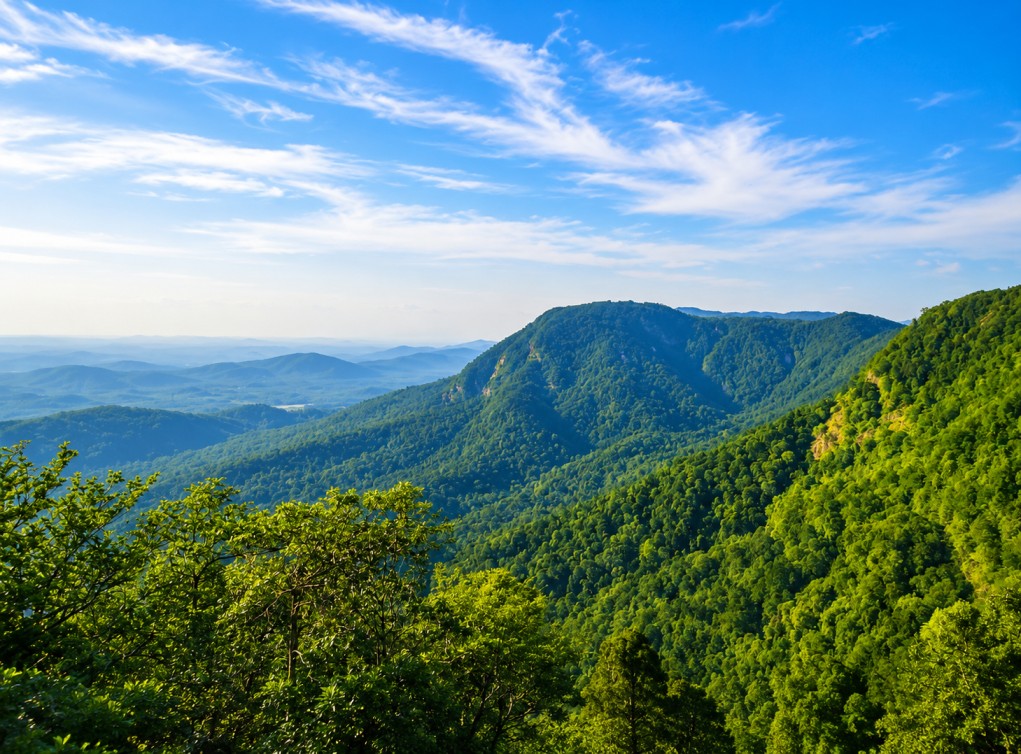
The landscape around Agumbe is what the Western Ghats look like when they receive more water than almost anywhere else on earth. The forests are not merely green — they are multiple shades of green simultaneously, from the pale yellow-green of new growth to the deep blue-green of ancient canopy trees, layered and dense and dripping with moisture for most of the year. Mosses, ferns, and epiphytic plants cover every available surface — tree trunks, rocks, fallen logs, the rooftops of older buildings — creating a landscape of extraordinary textural richness that photographers find endlessly rewarding.
The Barkana Falls — approximately 25 kilometres from Agumbe — drop 259 metres in a single plunge that makes them one of the highest waterfalls in Karnataka, and the approach through dense forest is itself a rewarding experience. Jogigundi Falls and Onake Abbi Falls are closer to Agumbe and accessible via forest trails that offer genuine trekking experiences through the kind of undisturbed forest that becomes rarer every year.
The ghats section of the road descending from Agumbe toward the coast — the famous Agumbe Ghat — is one of the most dramatic stretches of road in Karnataka, with fourteen hairpin bends dropping steeply through dense forest to the coastal plains below. The views from this descent, particularly in the early morning when mist fills the valleys and the forest glows in the low light, are simply breathtaking.
The Sunset Point: Agumbe's Most Famous View
Agumbe's Sunset View Point is the destination's most visited attraction and one of the most celebrated viewpoints in the entire Western Ghats. Positioned on the western escarpment of the Ghats, it offers an unobstructed view across the coastal plains to the Arabian Sea — and when the conditions are right, the sun descends through layers of cloud and haze to meet the sea in a display of colour that ranges from gold through orange to deep crimson and purple.
The sunset at Agumbe is not guaranteed — the same moisture that makes the forests so extraordinary also means cloud cover is frequent — but when it occurs in full clarity, it is genuinely one of Karnataka's most spectacular natural experiences. The uncertainty is part of the appeal; the wait at the viewpoint, watching the clouds shift and part and sometimes deliver the full spectacle, has its own value as an exercise in patient attention.
Early morning mist views from the same point are equally rewarding in their own way — the coastal plains below invisible under a sea of white cloud, with only the hilltops emerging above it, the world reduced to islands of green in a white ocean.
Wildlife and the King Cobra Capital of India
Agumbe's most remarkable wildlife distinction is its association with the king cobra (Ophiophagus hannah) — the world's longest venomous snake, capable of reaching lengths of five to six metres, and a species of considerable ecological importance as the apex predator of the snake world, feeding almost exclusively on other snakes.
The Agumbe Rainforest Research Station (ARRS), established by noted herpetologist Romulus Whitaker and his colleagues, has been conducting long-term research on king cobras and the broader herpetofauna of the Agumbe forests for decades. The research station has produced internationally significant findings on king cobra behaviour, ecology, and conservation, and has put Agumbe on the global map of wildlife research destinations.
For visitors, the ARRS offers educational programmes and guided nature walks that provide insights into the extraordinary reptile diversity of the Agumbe forests — though encounters with king cobras in the wild depend on forest time, season, and fortune rather than any guarantee. The forests support numerous other snake species, including the Malabar pit viper (spectacularly patterned and locally common), the green vine snake, and various species of rat snakes and wolf snakes.
🐒 Mammals
Lion-tailed macaques, Malabar giant squirrels, sambar, barking deer, Indian gaur, and the occasional leopard whose presence is more reliably indicated by pugmarks than by direct sighting.
🦉 Nocturnal — Slender Loris
Slender lorises — the large-eyed nocturnal primates of the Western Ghats — can sometimes be spotted on guided night walks through the forest, their eyeshine reflecting torchlight from the undergrowth.
🦜 Birds
Malabar trogons, great hornbills, Malabar pied hornbills, fairy bluebirds, Malabar whistling thrushes, and numerous species of kingfishers, woodpeckers, and flycatchers. The Sri Lanka frogmouth is regularly recorded and a prized sighting.
🐸 Amphibians
Among the highest amphibian diversity anywhere in India — the combination of high rainfall, permanent streams, and undisturbed forest creates ideal habitat for frogs and caecilians. Several species new to science have been described from this region in recent decades.
The Malgudi Connection: Culture and Literary Heritage
Agumbe holds a special place in the cultural memory of Indian television viewers of a certain generation as the location where Shankar Nag's landmark 1986 television adaptation of R.K. Narayan's Malgudi Days was partially filmed. The village's traditional architecture — its tiled-roof houses with wide verandas, its quiet lanes, its unhurried pace — provided the physical backdrop for the fictional town of Malgudi that Narayan had created in his novels set in a timeless, gently comic southern India.
Several of the houses used in the filming are still standing and identifiable, and for fans of the series, walking through Agumbe village involves a pleasant overlay of fictional memory onto the actual physical place — the recognition of doorways and courtyards and streets that featured in episodes watched in childhood.
The broader Malnad culture of the Shivamogga region — the culture of the rain-fed highland plateau — has its own distinctive traditions of architecture, cuisine, agriculture, and festival that Agumbe participates in and represents. Traditional Malnad houses with their characteristic sloping tiled roofs designed to handle the massive rainfall, their wooden pillars and carved decorative elements, and their spacious interiors represent a vernacular architectural tradition of genuine sophistication.
Cuisine: The Flavours of the Malnad Region
The cuisine of the Malnad region around Agumbe is one of Karnataka's most distinctive and satisfying food traditions — a cooking style shaped by the agricultural products of the wet highlands and the cultural traditions of the Havyaka Brahmin community that has historically been prominent in the region.
Akki rotti (rice flour flatbread), kootu curry (a coconut-based vegetable and lentil preparation), gasi (a coconut milk-based curry unique to Malnad), payasa (a sweet milk-based dessert), and a range of bamboo shoot preparations — bamboo being abundantly available in the forests — characterise the traditional Malnad table. Jackfruit in its various forms — raw, ripe, as seed preparations — features prominently in season. The jaggery produced from the arecanut and coconut palms of the region is of exceptional quality and used extensively in both sweet and savoury preparations.
Local homestays in Agumbe — which represent the best accommodation option in the village — typically offer home-cooked Malnad meals that are among the most authentic and satisfying food experiences available in this part of Karnataka.
Adventure Activities and Experiences
Trekking in the forests around Agumbe ranges from short walks to the nearby waterfalls to more demanding full-day treks through the forest to viewpoints and stream valleys that require a guide and reasonable fitness. The Agumbe to Someshwara trek — a challenging route that descends from the Ghats to the coastal belt — is one of the most celebrated treks in Karnataka, combining forest, waterfall, stream crossing, and panoramic views in a single long-day or overnight experience.
Night walks with guides through the forest edge are one of Agumbe's most distinctive offerings — the nocturnal diversity of the Western Ghats rainforest is extraordinary, with frogs calling from every puddle and stream, insects filling the air with sound, and the occasional reptile or mammal caught in the beam of a torch. These walks require a knowledgeable guide and appropriate footwear and are not recommended during heavy rainfall.
Photography workshops and nature interpretation programmes run by the ARRS and local naturalist guides offer structured educational experiences for visitors who want to understand what they are looking at rather than simply passing through.
Best Time to Visit Agumbe
The answer to this question depends entirely on what you are seeking.
When Agumbe is most dramatically itself — the rainfall at its most intense, the forests at their most vivid, the waterfalls running at full volume, and the wildlife activity at its peak. This is also when access can be challenging and when outdoor activities are limited by the sheer volume of water coming down.
The most comfortable weather — cool, relatively dry, with clear days that allow the famous sunset views to fully deliver. Wildlife activity remains high and the forest is still lushly green. The best period for trekking and for most visitor activities.
Temperatures rising and the landscape beginning to dry, but the forest retains much of its character and visitor numbers are lower than the peak season.
How to Reach Agumbe
By road, Agumbe is approximately 100 kilometres from Mangalore, 370 kilometres from Bengaluru, and 100 kilometres from Shimoga (Shivamogga). The approach from the coast via the Agumbe Ghat road is the most dramatic but requires careful driving, particularly during the monsoon. By rail, the nearest major station is Shivamogga, from which Agumbe is accessible by road. By air, the nearest airports are Mangalore (approximately 100 kilometres) and Hubballi (approximately 200 kilometres).
🚗 By Road
~100 km from Mangalore, ~370 km from Bengaluru, ~100 km from Shivamogga. The Agumbe Ghat approach from the coast is the most dramatic route — drive carefully during monsoon.
🚂 By Rail
Nearest major station is Shivamogga (Shimoga). Agumbe is accessible from Shivamogga by road.
✈️ By Air
Mangalore International Airport (~100 km) or Hubballi Airport (~200 km). Both offer onward road connections to Agumbe.
Travel Tips
- Book homestays well in advance for monsoon and peak season visits — accommodation options in Agumbe village are limited and fill quickly.
- Carry rain gear at all times regardless of season — the weather can change rapidly.
- Leech socks are strongly recommended for any forest walking during and after the monsoon.
- Respect the research work of the ARRS and follow their guidelines for wildlife encounters.
- The village itself is small — treat it with the respect due to a living community rather than a tourist attraction.