```html
🏔️ Tawang: Monasteries, Mountains, and Himalayan Heritage
Few destinations in India capture the imagination quite like Tawang. Set high in the mountains of western Arunachal Pradesh, this region has become synonymous with dramatic Himalayan scenery, deep Buddhist heritage, and a sense of journey that begins long before arrival. For travelers seeking a combination of spiritual depth, cultural richness, and some of the most spectacular mountain landscapes in India, Tawang consistently ranks among the most rewarding destinations in the entire Northeast.
🌄 Destination Overview
Tawang's reputation rests on a powerful combination of factors: it is home to one of the most significant Buddhist monasteries in the country, surrounded by landscapes that shift dramatically with altitude — from forested valleys to high mountain passes often covered in snow. The journey to Tawang itself, winding through some of the most dramatic mountain roads in India, sets the tone for what is fundamentally an immersive experience, where the destination and the journey to reach it are equally memorable.
✨ Why Tawang Deserves a Place on Your Itinerary
🏛️ Home to the Largest Monastery in India
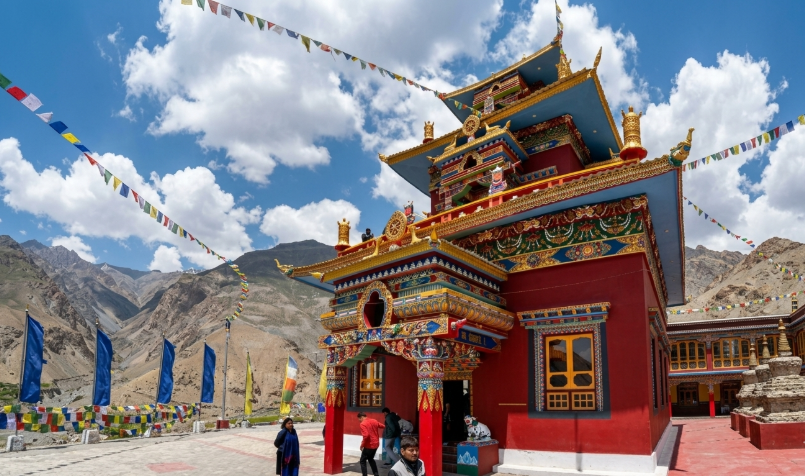
Tawang Monastery holds the distinction of being the largest monastery in India and one of the most significant Buddhist monastic institutions in the entire region. Its scale alone is impressive, but it's the living tradition within its walls — monks engaged in daily rituals, study, and prayer — that gives the monastery its real significance. For visitors, witnessing this active spiritual community against the backdrop of Himalayan peaks creates an experience that feels both historically grounded and very much alive in the present.
❄️ Stunning Himalayan Scenery
Tawang's landscapes shift dramatically as elevation changes, moving from lush valleys to stark, high-altitude terrain where snow can persist for much of the year. This variety means that even a relatively short journey through the region can reveal an enormous range of scenery, from terraced fields and forested slopes to barren mountain passes and alpine lakes, each offering its own distinct character and photographic appeal.
☸️ Rich Buddhist Heritage
Beyond the main monastery, the broader Tawang region is dotted with smaller monasteries, prayer flags, chortens, and communities where Buddhist practice remains central to daily life. This pervasive spiritual presence gives the region a distinctive atmosphere — one that many visitors describe as calming and contemplative, shaped by centuries of religious tradition that continue to influence local culture, festivals, and community life.
📍 Key Attractions
🏯 Tawang Monastery
As the centerpiece of the region, Tawang Monastery deserves significant time during any visit. Beyond its impressive architecture and scale, the monastery houses important religious artifacts, manuscripts, and statues, and offers visitors the opportunity to observe monastic life up close — from morning prayers to the rhythms of daily routine within this important institution. The monastery's hilltop location also offers sweeping views over the surrounding valley, adding a scenic dimension to its spiritual significance.
🏔️ Sela Pass
One of the most dramatic high-altitude passes in the region, Sela Pass offers stunning views and is often covered in snow for significant parts of the year, creating striking visual contrasts between snow-covered peaks, the pass itself, and the small lake often found near its summit. For many travelers, crossing Sela Pass becomes one of the most memorable parts of the journey to Tawang, both for the scenery and the sense of achievement in reaching such elevation.
🌊 Madhuri Lake
Known for its serene, mirror-like waters reflecting the surrounding mountains, Madhuri Lake has become a popular stop for travelers, offering a peaceful contrast to the more dramatic mountain passes elsewhere in the region. The lake's relatively accessible location combined with its scenic beauty makes it a natural stop for photography and quiet reflection.
🚩 Bum La Pass
Located near the Indo-China border, Bum La Pass carries both scenic and historical significance, offering high-altitude views along with insight into the region's strategic importance. Visits to this area often require additional permissions given its proximity to the border, but for those able to visit, it offers a unique combination of landscape and geopolitical context rarely found in mainstream tourist destinations.
📸 Activities for Visitors
🏘️ Cultural Tours
Guided cultural tours through Tawang and its surrounding villages offer context for the region's Buddhist heritage, history, and the daily life of local communities, helping visitors understand the deeper significance behind what they're seeing.
🙏 Monastery Visits
Beyond the main Tawang Monastery, the region's smaller monasteries offer additional opportunities for cultural and spiritual engagement, each with its own character and local significance, often visited as part of broader exploration of the surrounding valleys.
📷 Photography
With its combination of monastery architecture, dramatic mountain passes, alpine lakes, and prayer-flag-draped landscapes, Tawang offers an exceptional range of subjects for photographers, with conditions varying significantly depending on season and altitude.
ℹ️ Practical Information
Places to visit nearby
```