🪷 Lotus Temple
✨ Overview
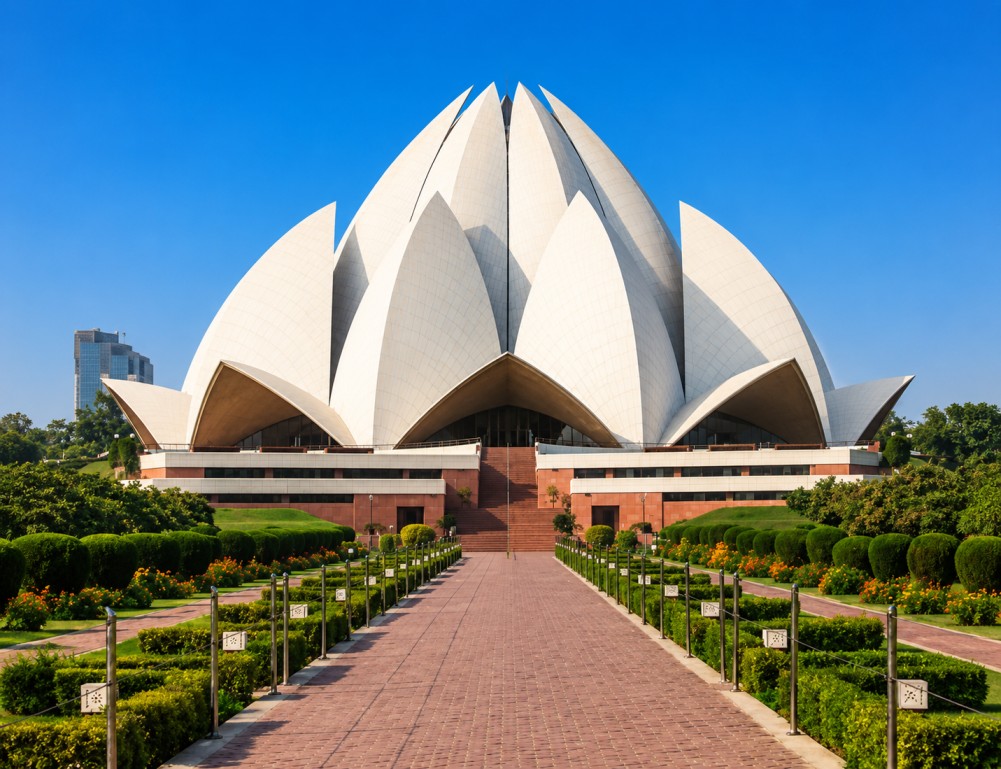
The Lotus Temple stands as one of the most architecturally extraordinary and spiritually inclusive destinations in India, representing a house of worship of rare and breathtaking visual beauty whose iconic lotus-shaped structure of gleaming white marble has become one of the most recognizable and celebrated buildings in the entire subcontinent. Situated in the Bahapur area of New Delhi in the Nehru Place neighborhood of south Delhi, the Lotus Temple, formally known as the Bahá'í House of Worship, is a destination of singular architectural and spiritual character, offering a landscape defined by the sweeping white petals of the temple structure rising from nine surrounding reflecting pools, the immaculate gardens of manicured lawns and flowering trees that frame the approach to the central structure, the vast and luminous interior hall of remarkable acoustic and spatial quality that opens upward through the converging petals to a circular skylight above, and an atmosphere of universal welcome, meditative silence, and architectural wonder that makes this one of the most moving and quietly extraordinary visitor experiences available anywhere in the Indian capital. The destination draws architecture enthusiasts, spiritual seekers, curious travelers, and residents of Delhi from across the city and the country, offering an encounter with a building whose design has won numerous architectural awards and whose open-door philosophy of universal worship has welcomed millions of visitors from every faith, background, and nationality since its completion in 1986.
📊 Global Impact & Visitation Statistics
💎 What Distinguishes Lotus Temple
What distinguishes the Lotus Temple from other religious and heritage landmarks in Delhi is not merely the magnificence of its architecture or the symbolic power of its lotus form, but the unique combination of universal spiritual openness, exceptional landscape setting, architectural achievement of global recognition, and the profound quality of silence and meditative calm that the interior hall maintains with remarkable consistency despite receiving millions of visitors each year. The temple belongs to the Bahá'í Faith, whose central teaching of the unity of all religions and the oneness of humanity is expressed architecturally through a building that belongs to no single religious tradition and welcomes every person regardless of faith, making it a spiritual space of entirely inclusive character that is genuinely rare among the major religious sites of the world. This layered character elevates the Lotus Temple beyond a simple architectural attraction into a destination of genuine spiritual depth, global architectural significance, and the particular quality of a place where the beauty of the building and the silence of the interior work together to create an experience of unusual and lasting emotional resonance.
🌟 Why Visit - B2B Value Proposition
The recognition of the Lotus Temple as one of the most visited buildings in the world, receiving more annual visitors than the Eiffel Tower or the Taj Mahal according to several estimates, reflects its unparalleled importance within the cultural and spiritual landscape of the Indian capital and its standing as a landmark of global architectural significance. Unlike temples or mosques or churches that belong to specific religious traditions and may carry a particular devotional atmosphere that not all visitors share, the Lotus Temple offers a cohesive experience where the architectural beauty of the building, the meditative quality of the interior silence, the landscape of reflecting pools and gardens, and the universal spiritual welcome of the Bahá'í Faith work together to create a destination of genuinely inclusive and deeply moving character.
🏗️ Architectural Excellence
One of the most compelling reasons to visit is the architectural experience of the building itself, designed by the Iranian-Canadian architect Fariborz Sahba and completed in 1986 after a construction process of considerable technical complexity. The temple consists of twenty-seven free-standing marble-clad petals arranged in clusters of three to form nine sides, each cluster of petals framing one of the nine entrances to the central hall in a design of extraordinary geometric precision and organic visual grace that achieves its most powerful effect from a distance, where the full lotus form is visible rising above its reflecting pools in a composition of white marble and blue water of breathtaking visual beauty.
🕯️ Universal Spiritual Welcome
Additionally, the Lotus Temple showcases a profound expression of the Bahá'í principle of unity through its architectural and philosophical openness, offering a space where visitors of every faith are invited to sit in silence, offer their own prayers in their own tradition, and share a moment of meditative calm within a building designed to belong equally to all of humanity. The combination of architectural magnificence, universal spiritual welcome, exceptional landscape setting, and the remarkable quality of interior silence and light further strengthens its appeal as a deeply rewarding and quietly extraordinary destination within the busy and historically layered landscape of the Indian capital.
👁️ Key Highlights for Tour Operators
🪷 Iconic Exterior Form
Among the architectural landmarks, the exterior form of the Lotus Temple itself stands out as the most iconic and visually overwhelming feature of the site. Viewed from the approach gardens and the surrounding reflecting pools, the twenty-seven marble petals of the temple rise from the water in a composition of organic architectural grace and structural precision that is unlike any other religious building in India or the world. The quality of the Pentelic marble used in the construction, the same material employed in the Parthenon of Athens, gives the surface of the petals a luminous and slightly translucent quality that shifts beautifully with the changing light of day, from the warm gold of early morning to the cool white brilliance of midday and the soft amber of the evening hours.
🕯️ Interior Hall Experience
The interior hall of the Lotus Temple, a single vast space of remarkable height and spatial generosity that accommodates more than two thousand five hundred seated visitors beneath the converging petals and the circular skylight above, is a highlight of exceptional architectural and sensory significance. The quality of natural light filtering through the glazed openings between the petals fills the interior with a diffused and even illumination of considerable beauty, while the acoustic properties of the space create a quality of sound that amplifies the collective silence of the gathered visitors into an experience of meditative depth that many find profoundly affecting.
💧 Reflecting Pools & Gardens
The nine reflecting pools surrounding the temple and the meticulously maintained gardens of the approach landscape add a significant aesthetic dimension to the visit, framing the central structure in a setting of water, lawn, and flowering trees that creates the impression of the lotus rising from a natural water body in a composition of landscape and architecture of considerable visual completeness and harmony.
🎯 Group Experience Activities
🧘 Meditative Silence & Personal Prayer
Visiting the interior hall and sitting in meditative silence or personal prayer is the most universally practiced and spiritually rewarding activity at the Lotus Temple, with the open-door policy of the Bahá'í Faith inviting every visitor regardless of religious background to enter the hall, take a seat on the simple wooden benches arranged across the floor, and spend time in whatever form of quiet contemplation or personal devotion is natural to them. The experience of sitting in the vast, light-filled interior in the company of other visitors from every background, united by the shared silence of the space, offers a quality of collective meditative calm that is genuinely unusual at any public religious or heritage site in India.
📸 Photography & Garden Exploration
Exploring the surrounding gardens and reflecting pools and photographing the temple from the various vantage points offered by the approach landscape is a widely undertaken and deeply rewarding activity, as the changing perspectives on the lotus form from different angles and distances reveal successive aspects of the architectural design that are not visible from any single point of observation. The early morning and late afternoon hours offer the most favorable light conditions for experiencing and photographing the marble surfaces of the temple at their most luminous and visually dramatic.
ℹ️ Information Center & Cultural Context
Visiting the information center adjacent to the temple, which offers a comprehensive introduction to the Bahá'í Faith, the principles of unity and oneness that underpin its teachings, and the architectural story of the temple's design and construction, provides a valuable context for the experience of the building that deepens its significance considerably and leaves the visitor with a fuller understanding of the spiritual vision that the architecture is intended to express.
🗓️ Best Time to Visit - Visitor Planning
The most favorable period to visit the Lotus Temple is from October to March, when the pleasant winter temperatures of Delhi make extended time in the outdoor gardens and reflecting pool landscape comfortable and enjoyable, and the clear winter skies provide the most flattering and sharp natural light for appreciating the white marble surfaces of the temple exterior at their most luminous and visually beautiful. During these months, the cool morning air and the low angle of the winter sun create particularly atmospheric conditions for an early visit before the crowds of the midday hours arrive.
The early morning hours throughout the year offer the most serene and uncrowded conditions for the interior hall experience, as the relative quiet of the first visiting session of the day allows the meditative quality of the space to assert itself most fully before the larger visitor numbers of the later morning and afternoon hours alter the character of the experience. Weekday visits generally offer a quieter and more contemplative encounter with the temple than weekend visits, when families and school groups from across Delhi make the Lotus Temple one of the most popular leisure destinations in the southern part of the city.
The summer months from April to June bring considerable heat to Delhi, making extended time in the outdoor areas of the approach gardens uncomfortable during the middle hours of the day, though the interior of the temple maintains a naturally cooler and more pleasant temperature that makes the indoor experience rewarding throughout the year regardless of the outdoor conditions.
🌞
Peak Season
October-March
Pleasant temperatures
🌅
Best Hours
Early Morning
Less crowded
📷
Photography
Morning & Evening
Golden hours
📅
Group Visits
Weekdays Preferred
Peaceful experience
🚇 Connectivity & Accessibility
The Lotus Temple is situated in the Bahapur area of south Delhi and is exceptionally well connected to every part of the city through the Delhi Metro network, with the Lotus Temple Metro Station on the Violet Line placing the building within direct and comfortable reach of the central Delhi metro grid without requiring any road transport on arrival. This makes the Lotus Temple one of the most conveniently accessible major attractions in the entire city for visitors staying anywhere along the metro network.
Road connectivity from every part of Delhi is straightforward and well established, with the temple situated in close proximity to the Nehru Place commercial district and the broader south Delhi road network, making it accessible by taxi, auto-rickshaw, and bus from across the city with equal convenience. Indira Gandhi International Airport, situated approximately 15 kilometres from the Lotus Temple, provides international and domestic air connectivity from across India and the world, making the temple a practical and deeply rewarding early or late inclusion in any Delhi itinerary for visitors passing through the capital on their way to or from other destinations across northern India.
🚇
Metro Access
Violet Line
Direct station access
🚕
Road Network
Multiple transport options
South Delhi proximity
✈️
Airport Distance
15 km from IGI
Easy connections
📍
Location
Bahapur, Nehru Place
Central Delhi
🤝 B2B Partnership Opportunities
Customizable tours for international groups
Team-building & meditative experiences
Architecture & cultural learning programs
Bundled itineraries with premium hotels
Exclusive early morning access options
Expert interpretation in multiple languages
💼 For Travel Partners: The Lotus Temple's universal appeal, architectural significance, accessibility, and capacity to accommodate large groups make it an ideal anchor destination for Delhi itineraries. With 4 million+ annual visitors and world-class infrastructure, it offers proven value for group operators and premium package providers.